
A seven day Oman itinerary that links Muscat, the Jebel Akhdar mountains and the Sharqiya Sands without rushing, plus an honest look at where the money actually goes.
How long does an Oman itinerary need
Seven days. That is the honest minimum for an Oman itinerary that covers both the coast and the interior without turning into a driving exercise. Five days forces a choice: Muscat and the mountains, or Muscat and the desert, not both. Ten days is comfortable and lets you add the far south. But a week, planned around three bases rather than six, gets you the sea, the canyons and the dunes with time to actually sit in each of them.
The geography helps. Muscat sits about an hour's flight from Dubai, and everything a first visit needs lies within a three hour drive of the capital: the Jebel Akhdar plateau, the Sharqiya Sands, the wadis of the eastern coast. Oman is not a country you cross; it is a country you loop. The week described here is one loop, driven clockwise, with no single transfer longer than an afternoon.
The shape of the week
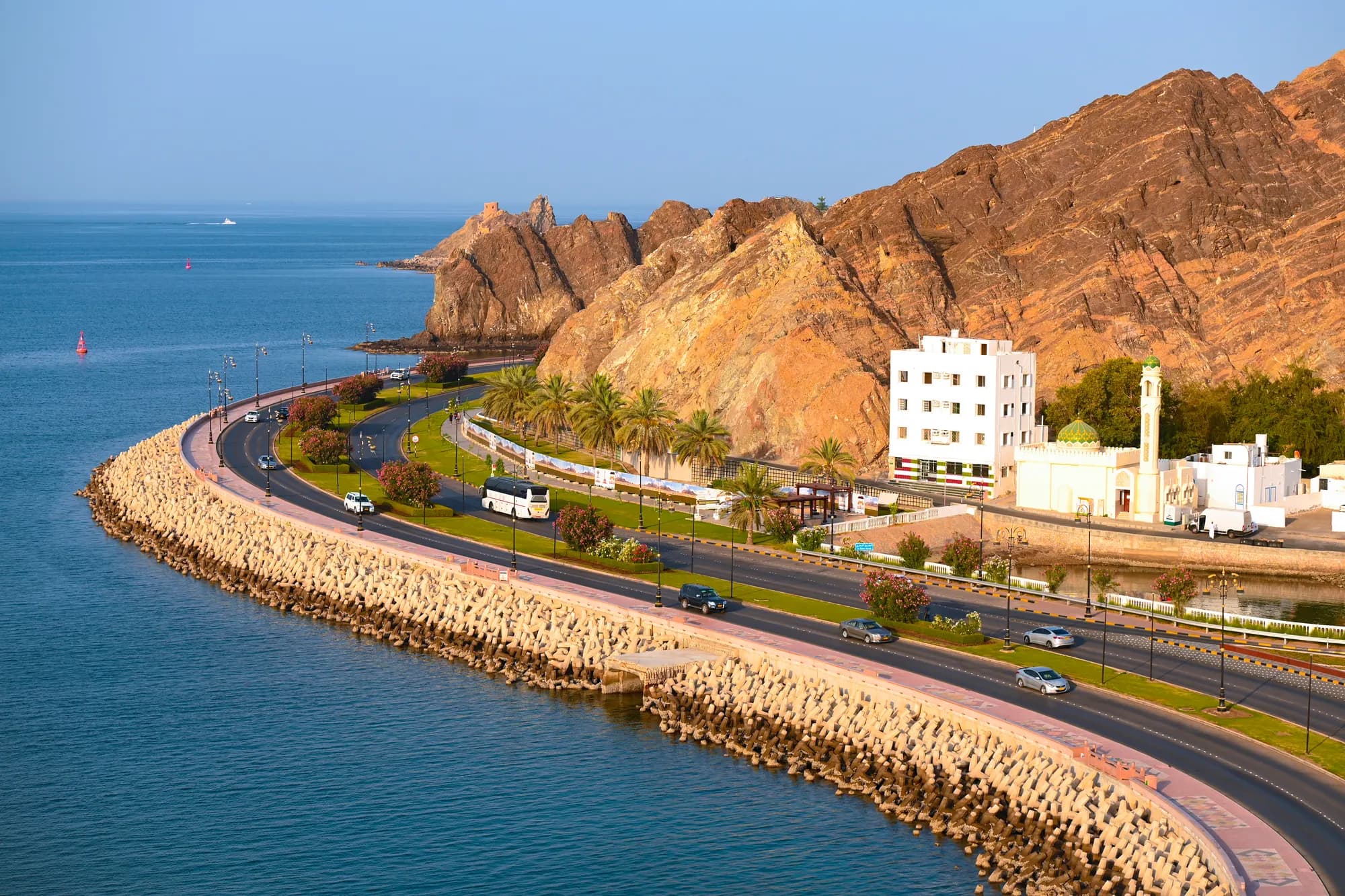
Two nights in Muscat to start, which is enough for the old harbour, the Grand Mosque and a first swim. Then two nights on the Jebel Akhdar plateau, two thousand metres up, where the air drops ten degrees and the terraced villages grow pomegranates and roses. Then down and east: a night in the Sharqiya Sands among the dunes, and a final night near Sur for the wadis and the turtle beaches, before the easy coastal road back to Muscat.
Nizwa slots in on the way up or down from the mountain: the fort, the souq and, if your dates land on a Friday morning, the livestock market. The order matters more than the stops. Mountains before desert means you acclimatise to slow days early, and it keeps the longest drive, the mountain-to-sands leg, in the middle of the week when you have rhythm. Reversed, the trip ends with its most tiring day, which is how good itineraries sour.
Where the money goes
Oman surprises people on cost, in both directions. The country itself is reasonable: fuel is cheap, food is honest, entry fees are minor. What costs money is the way you move. The mountain road up Jebel Akhdar is restricted to four wheel drives, and once you need one 4x4 you tend to keep it for the week, ideally with a driver-guide who knows which wadi is flowing and which dune line the wind has closed. That single decision shapes the budget more than any hotel choice.
The second lever is the nights. Muscat offers everything from business hotels to serious resorts, so the city nights can flex to your budget. The mountain plateau and the desert are different: each has a small number of genuinely good places and a long tail of basic ones, with little in between, so those three or four nights are where the spend concentrates. Our honest advice is to put the money there and economise in the capital, not the other way round.
When to go
October to April is the season for the loop above, and the window is wider than most people use. November and February are the quiet sweet spots: the light is soft, the wadis are full after any autumn rain, and the mountain evenings ask for a jumper rather than a coat. December and January bring the crowds from Europe and the region's school holidays, and the best mountain and desert rooms go months ahead. May to September the coast and interior run hot, though the mountains stay usable longer than the plains.
Salalah, in the far south, runs on its own calendar: the khareef monsoon turns its hills green from roughly June to early September, which is precisely when the rest of the country empties. If your dates are fixed by school terms you will pay peak rates and share the wadis; if they are not, the shoulder months are kinder, and we have written more broadly on why shoulder seasons reward travellers. For a first week, November is the month we book most often.
| Months | Coast and interior | Notes |
|---|---|---|
| October to November | Warm days, quiet | Wadis full after autumn rain |
| December to January | Mild, busiest | Book mountain and desert rooms early |
| February to March | Mild, quieter | Best light in the mountains |
| April to May | Heating up | Coast fades first, plateau holds |
| June to September | Hot in the north | Salalah's green khareef season |
Salalah is a different trip
The far south deserves its own paragraph because it derails more Oman itineraries than anything else. Salalah sits around a thousand kilometres from Muscat, a serious drive or an internal flight, and its landscape, frankincense country with a monsoon-fed coastline, has little in common with the north. Trying to bolt it onto a seven day loop means giving up the mountains or the sands and spending a day of your week in transit.
The better pattern is to treat it as a second visit, or to plan ten to twelve days from the start with the flight built in. Couples often pair the northern loop with a few slow days in the south, which is one reason Oman keeps appearing on the honeymoon shortlist for 2026. If you only have the week, spend all of it in the north and leave Salalah as the reason to come back. It is a good reason.
The mistakes a week invites
The classic error is the six-base week: a night everywhere, a feel for nowhere, and a bag that never properly unpacks. Oman's distances flatter this mistake because no single drive looks long on the map, but pack-up mornings are what actually eat a holiday. Three bases in seven days is the right count. It gives you two full mountain days, a proper desert sunset and sunrise, and a Muscat you see rather than merely land in.
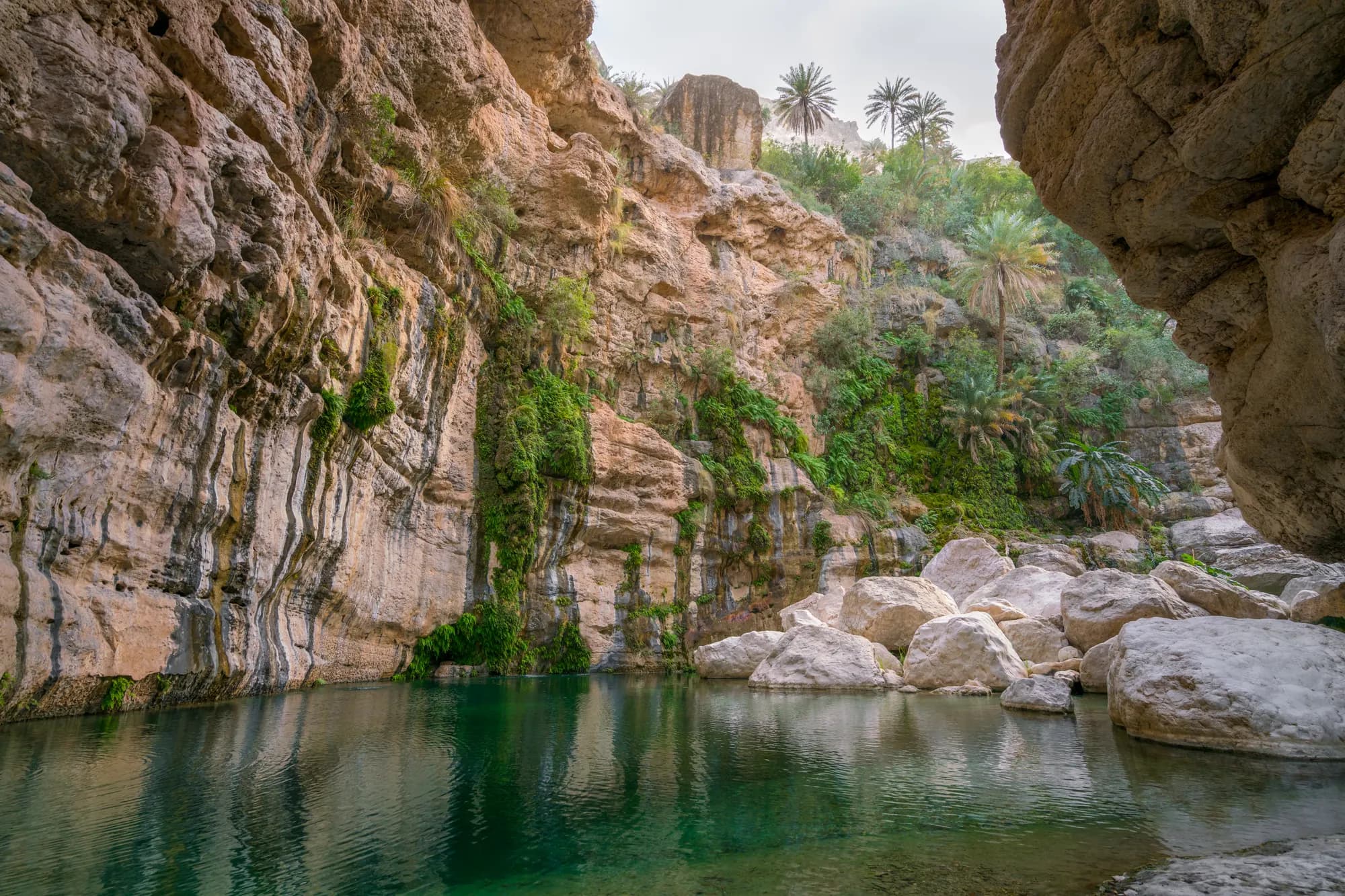
The second error is treating the wadis as drive-by photography. Wadi Shab needs half a day: a short crossing at the entrance, an hour's walk in, a swim through to the final pool. Rushed, it is a car park and a queue. Given time, it is the day people talk about afterwards. This is the case for fewer places, longer stays applied to a single country: the itinerary that looks thin on paper is usually the one that was planned properly.
How JMJ plans an Oman itinerary
We start with the dates and work backwards. The month decides the loop: a November or February week gets the full coast and interior route above; a summer enquiry gets an honest conversation about the mountains and Salalah instead. Then we settle the vehicle question, because a good driver-guide changes the trip more in Oman than almost anywhere we send people, and the best ones are booked out well before the good hotels are.
From there it is sequencing: which wadi on which day, where the desert night falls, whether the mountain gets two nights or three. We hold the mountain and desert rooms first, since those are the scarce pieces, and let Muscat flex around your flights. If a week in Oman is on your list for the coming season, tell us your dates and who is travelling on our enquiry page, and we will send back a route with the trade-offs marked honestly.
Frequently asked
How many days do you need for an Oman itinerary?
Seven days is the honest minimum for a first itinerary that covers both the coast and the interior: two nights in Muscat, two on the Jebel Akhdar plateau, one in the Sharqiya Sands and one or two near Sur for the wadis. Five days forces you to drop either the mountains or the desert. Ten to twelve days lets you add Salalah in the far south without rushing anything.
Is five days enough for an Oman itinerary?
Five days works if you accept a choice: Muscat plus the mountains, or Muscat plus the desert and wadis, not both. Done that way it is a good short trip, particularly from the Gulf, where the flight is about an hour. What five days cannot do is the full coast and interior loop; attempting it means a different bed every night and most of the trip seen through a windscreen.
What is the best 7 day Oman itinerary?
Start with two nights in Muscat, then two nights on the Jebel Akhdar plateau with Nizwa's fort and souq on the way. Drop down and east for a night among the dunes of the Sharqiya Sands, then finish with a night or two near Sur for Wadi Shab, Wadi Bani Khalid and the turtle beaches, before the coastal road back to Muscat. Three bases, one clockwise loop, no transfer longer than an afternoon.
Is Oman expensive to travel?
Day-to-day Oman is reasonable: fuel, food and entry fees are all modest. The costs that add up are the four wheel drive with a driver-guide, which the mountain roads effectively require, and the small number of genuinely good places to stay on the Jebel Akhdar plateau and in the desert, where demand outruns supply in winter. Spend there and economise in Muscat, where the choice of hotels is far wider.
Do you need a 4x4 for an Oman itinerary?
For the itinerary described here, yes. The road up Jebel Akhdar is restricted to four wheel drives at a checkpoint, and driving into the Sharqiya Sands is not something to attempt in a saloon car. Muscat, Nizwa and the coastal road to Sur are all fine in an ordinary car, so a city-and-coast trip can skip the 4x4. Most travellers doing the full week take one vehicle with a driver-guide throughout.
What is the best month for an Oman itinerary?
October to April for the northern loop, with November and February the quietest of the good months. December and January are mild and popular, and the few good mountain and desert rooms sell out months ahead. Summer is hot in the north but is exactly when Salalah, in the far south, turns green under the khareef monsoon, so a summer trip simply points at a different Oman.
Can you combine Muscat and Salalah in one week?
You can, but we rarely recommend it. Salalah is around a thousand kilometres from Muscat, so the combination needs an internal flight and still costs you the better part of a day each way. In seven days that means sacrificing the mountains or the desert. The pairing works well at ten to twelve days; at seven, choose the north and keep Salalah for a second visit.
How far is Oman from Dubai?
Muscat is about an hour's flight from Dubai, which makes Oman one of the easiest complete changes of scenery in the region: mountains, dunes and wadis within a short hop. Many of our travellers add the week to a UAE stay, or use a long weekend for a shortened version. From Europe, most routes connect through the Gulf, and the week works well tacked onto those connections.