
The best time to visit Oman is October to April for the coast and desert, but the mountains and Salalah run on calendars of their own. Here is how the year actually divides.
The best time to visit Oman, answered straight
October to April is the best time to visit Oman for most itineraries. Muscat sits in the mid twenties to low thirties Celsius, the desert nights turn cool enough for a fire, and the wadis run clear and swimmable. From about mid May the coastal thermometer climbs hard and stays there until September. That is the honest headline. The useful footnote is that Oman is not one climate but three, and two of them, the high mountains and the far south, break the rule in interesting ways.
Within that window the sweet spots are narrower. November and February to March give you warm days, cold desert nights and the fewest compromises. December and January are the coolest and the busiest, since European winter holidays and the UAE's own long weekends both point this way. Oman is about an hour from Dubai by air, which makes it the easiest serious trip in the region and explains why the peak weeks fill early. Book those months well ahead or aim either side of them.
The mountains keep their own calendar
Jebel Akhdar and Jebel Shams stand around two thousand metres and more, and altitude does what it always does: takes roughly ten degrees off the coastal temperature. That makes the mountains the exception to every rule below. In July, when Muscat is at its fiercest, the plateau is merely warm. In January it is genuinely cold, with the occasional frost and, in some years, a dusting of snow on the highest ground. Pack for it. Travellers are routinely surprised to need a proper jacket in Arabia.
The month the mountains are kindest is a matter of what you want from them. March and April bring the rose harvest on the Saiq Plateau, when the terraced villages smell of damask and the distilleries work. October and November give long clear days for the rim walks above Wadi Ghul. And the summer months, dismissed everywhere else in the country, are quietly excellent up here: warm mornings, dramatic afternoon cloud, and lodges with rooms to spare while the coast waits out the heat.
Salalah and the khareef, the rule reversed
The far south runs backwards. From roughly late June to early September the khareef, a monsoon drift off the Indian Ocean, wraps the mountains behind Salalah in mist and steady drizzle. The hills turn green, waterfalls appear where there was bare rock, and temperatures sit in the mid twenties while the rest of Arabia bakes. It is one of the strangest and most rewarding seasonal spectacles in the region, and Gulf families know it well, so the season is lively rather than lonely.
The trade-off is visibility. During the khareef itself you may not see the sun for days, and the sea is rough and unswimmable. For green hills without the crowds, come in late September or October, just after the mists lift: the landscape is still soft and the waterfalls still run, but the roads are clear and the light is back. By December Salalah is simply a warm, dry beach town with empty sand, which is its own quieter argument.
Desert, wadis and forts through the year
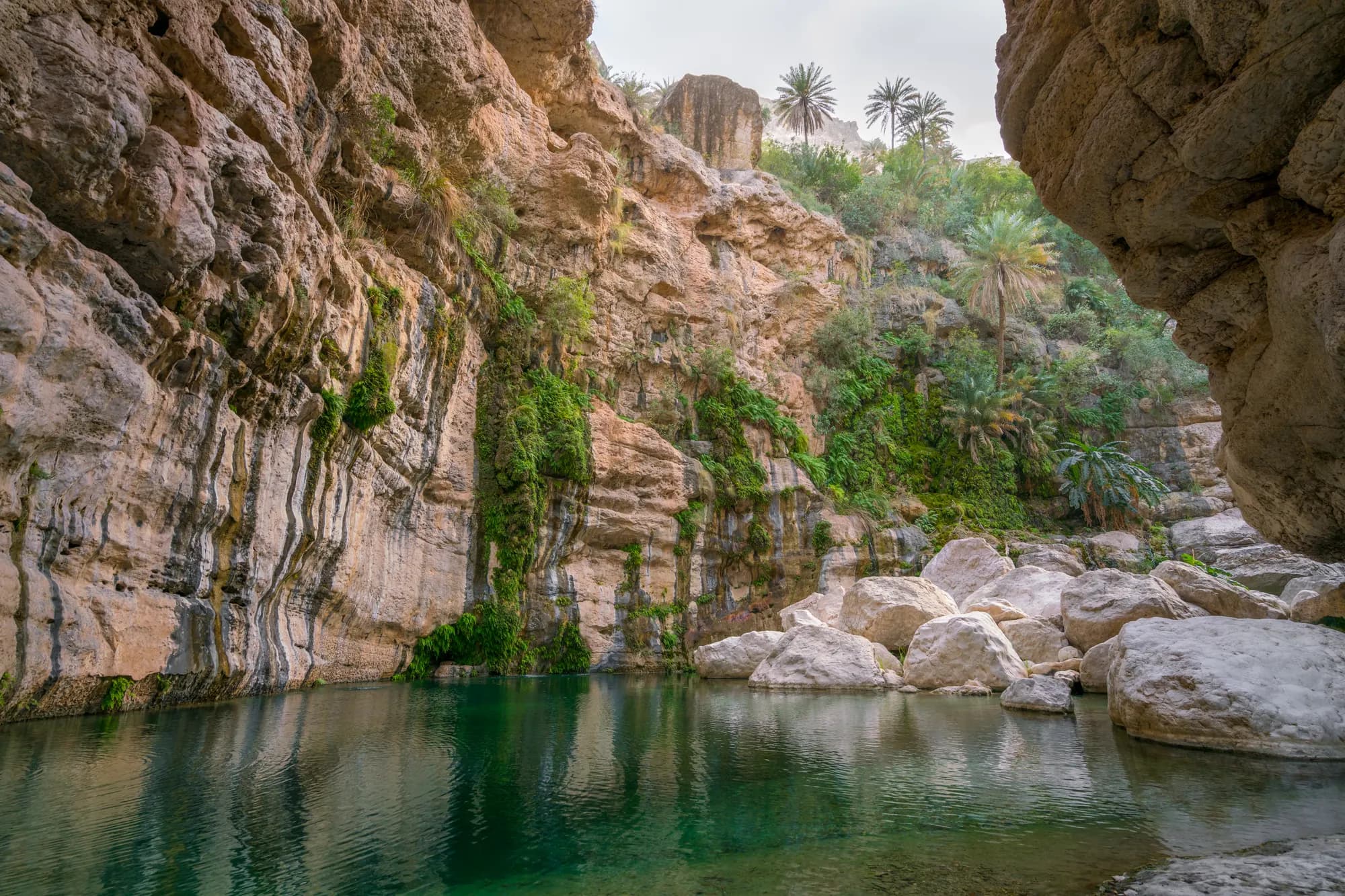
The Sharqiya Sands are at their best from November to February, when days are warm rather than punishing and nights drop low enough that the campfire is a necessity rather than a prop. October and March still work well; April is the outer edge. The wadis, Bani Khalid and Shab among them, are swimmable most of the year, though winter mornings can make the water feel brisk and rare heavy rain can close them at short notice. Local advice on the day matters more than the forecast.
Forts and old towns, Nizwa, Bahla, Rustaq, are a winter pleasure and a summer test. They are stone and open courtyard, with little shade and no pretence of air conditioning, so the months from May to September push visits into the first two hours of daylight. Nizwa's Friday livestock market runs year round and rewards an early start in any month. If the fort circuit sits high on your list, that alone is reason to stay inside the window most guides name as the best time to visit Oman.
| Months | Coast and desert | Mountains and far south |
|---|---|---|
| Oct to Nov | Warm, clear, quieter | Prime walking on the plateau |
| Dec to Jan | Coolest and busiest weeks | Cold nights, occasional frost |
| Feb to Mar | Warm days, clear wadis | Rose harvest begins in March |
| Apr to May | Heating fast by May | Plateau still comfortable |
| Jun to Sep | Coastal heat, early starts | Khareef greens Salalah |
The quiet months, and who they suit
There is a respectable case for the edges. October and April carry a few degrees more heat than the peak weeks and a fraction of the traffic, and hotel space is easier everywhere from the mountains to the sands. We have written before about why shoulder seasons reward travellers, and Oman is one of the clearest examples: the country's appeal is emptiness, big landscape and unhurried time, and all three are more abundant when the calendar says almost right rather than perfect.
Oman also suits the traveller who would rather go deeper than further. Distances are real: Muscat to the Sharqiya Sands is a half day's drive with stops, and Salalah is a domestic flight or a very long road. Trying to collect all of it in five days produces a trip that is mostly windscreen. The better answers keep to one or two regions and let them breathe, which is the argument we make in the case for fewer places, longer stays.
How JMJ plans an Oman trip
We start with the month, because the best time to visit Oman depends on which Oman you want, and the month decides the shape of the trip more than the budget does. A December enquiry becomes a coast, desert and Nizwa circuit booked early; a July enquiry points to the Jebel Akhdar plateau or the Salalah mists instead of a compromise on the coast. For travellers based in the UAE it also pairs naturally with the December long weekend and the leave maths, since the drive or short flight wastes none of the holiday.
Tell us the dates you can actually take, who is travelling and how you feel about early alarms, and we will tell you honestly which Oman you will get in that window, including when we think you should move the dates. Then we build it: the right region, the right pace, drivers and guides we trust, and the mountain nights booked before they vanish. Start with a note through our enquiry page and we will come back with a considered first draft rather than a form reply.
Frequently asked
What is the best time to visit Oman?
October to April for most trips. Muscat, the desert and the wadis are all at their most comfortable, with warm days and cool nights. December and January are the coolest and busiest; November and February to March are the sweet spot. The mountains and Salalah run on different calendars: the Jebel Akhdar plateau is pleasant even in summer, and Salalah's green khareef season falls between late June and early September.
Is summer a bad time to visit Oman?
On the coast, yes: from May to September Muscat regularly passes forty degrees and outdoor sightseeing shrinks to early morning. But two regions invert the rule. The Jebel Akhdar and Jebel Shams plateaus sit around two thousand metres and stay merely warm, and Salalah's khareef turns the far south green and misty from late June to early September. A summer trip built around those two is genuinely good, not a consolation prize.
When is the khareef season in Salalah?
Roughly late June to early September, with the fullest mist and greenery usually in July and August. The mountains behind Salalah catch a monsoon drift off the Indian Ocean, temperatures drop into the mid twenties, and waterfalls run through hills that are bare rock the rest of the year. Expect drizzle, low cloud and lively Gulf holiday crowds. For green landscape with clearer skies and fewer people, come in late September or October as the mists lift.
What is the best month to visit Oman for the desert?
November through February. Days in the Sharqiya Sands are warm without being punishing, and nights are cold enough that the campfire earns its keep, sometimes dropping towards single digits. October and March are still very usable. From April the daytime heat builds quickly, and by midsummer the desert is somewhere you cross in an air conditioned car rather than somewhere you sleep.
Is December a good time to visit Oman?
One of the best, and the most in demand. Muscat sits in the mid twenties, desert nights are properly cold, the wadis are clear and the fort towns are comfortable all day. The catch is company: European winter holidays and Gulf long weekends both land in December, so the well known camps and mountain lodges fill months ahead. Book early, or take almost identical weather with fewer people in November or late February.
When is the best time to visit Oman's mountains?
For walking, October to November and February to April, when the plateau days are clear and mild. March and April add the rose harvest on the Saiq Plateau. Winter proper is beautiful but genuinely cold at altitude, with occasional frost and, some years, snow on the highest ground, so pack accordingly. Summer is the mountains' quiet advantage: while the coast is at its hottest, Jebel Akhdar stays comfortable and the lodges have room.
Does it rain in Oman, and can the wadis close?
Rain is rare but real. Winter systems occasionally bring heavy downpours to the north, and when they do, wadis can flood fast and close at short notice. Guides and locals watch this closely, and a sensible itinerary treats a wadi swim as a plan that might move by a day. In the far south, the khareef brings steady drizzle to the Salalah hills from late June to early September, which is precisely its appeal.
How far is Oman from Dubai, and does that change when to go?
Muscat is about an hour's flight from Dubai, and the border is a comfortable drive, which makes Oman the region's easiest substantial trip. It changes the calendar in one way: UAE long weekends and school breaks send a wave of visitors across, so the peak winter dates tighten further. If your own dates are flexible, travelling midweek or just outside the holiday clusters buys noticeably quieter camps and wadis for the same weather.