
The best time to visit Singapore is February to April, the driest stretch of the year. The honest catch: the temperature never moves, so what really changes month to month is the rain, the crowds and the room rates.
The best time to visit Singapore, answered first
The best time to visit Singapore is February to April, when the northeast monsoon dries out and the city gets its longest run of clear afternoons. February is usually the driest month of the year. That is the answer most guides give, and it is correct as far as it goes. But Singapore sits one degree north of the equator, and the thermometer barely acknowledges the calendar: expect daytime highs around thirty-one or thirty-two degrees in every month you could name.
So the more useful question is not when the weather is good, because it is never good in the alpine sense and never terrible either. It is when the rain falls, how the city prices itself, and how full the pavements are. Rain in Singapore arrives in loud, short bursts, usually in the afternoon, and rarely wastes a whole day. What actually varies through the year is the rhythm of those bursts, and the cost of a room.
A city built for its own weather
The heat deserves respect, but not fear. Humidity sits high all year, and the felt temperature at midday can pass thirty-five degrees. The saving grace is that Singapore is the most thoroughly air-conditioned city on earth, or close to it. Covered walkways link the MRT to the malls, the malls to the museums, and whole gardens have been brought indoors. You are rarely more than a few minutes from cool air, whichever month you choose.
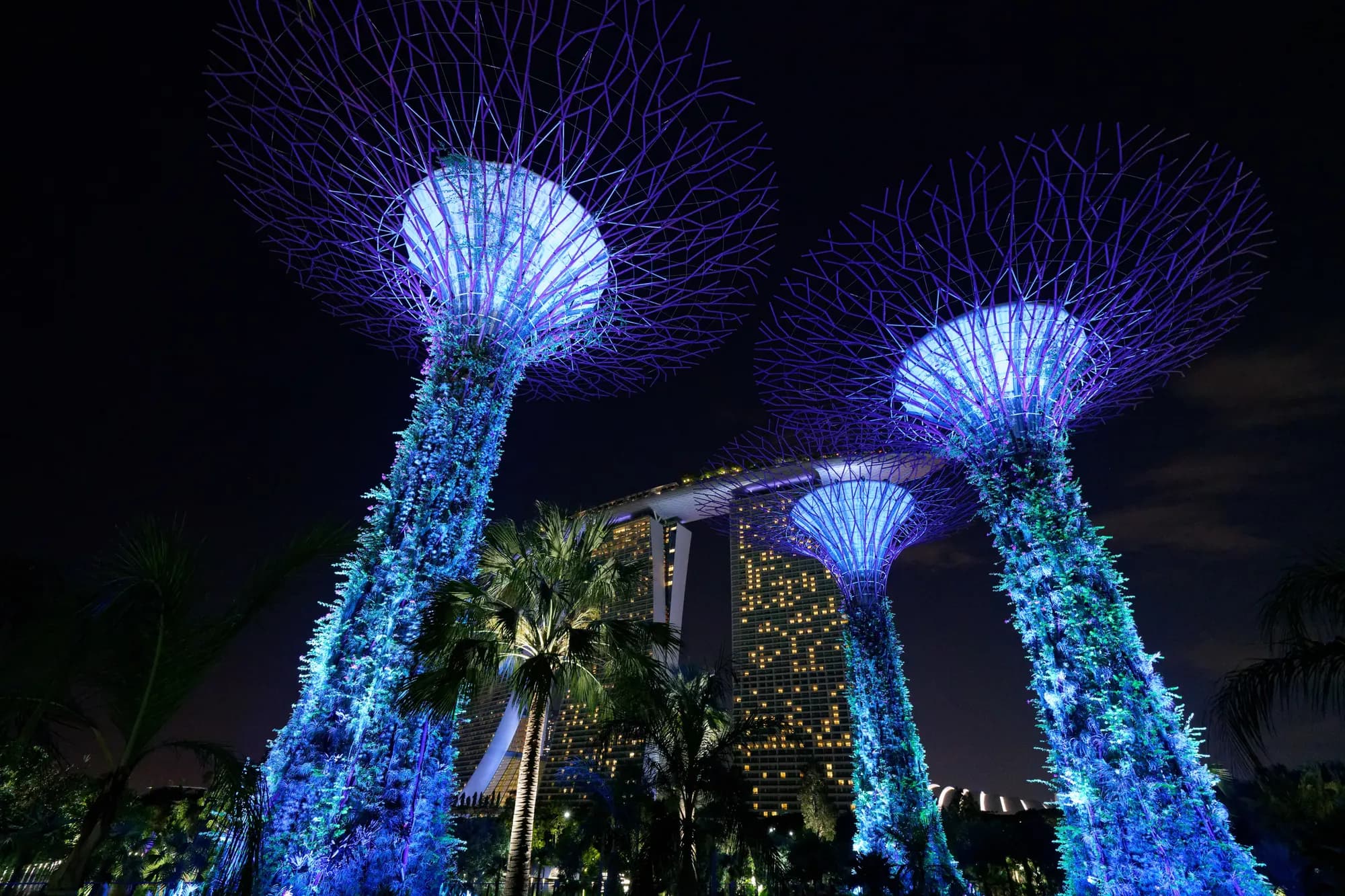
The practical consequence is a daily shape rather than a seasonal one. Mornings are for the Botanic Gardens, the hawker breakfast, the walk along the river. The hours after noon belong to galleries, long lunches and the hotel pool. Evenings, once the heat breaks, are the city's best self: night-lit gardens, open-air dining, a skyline that earns its reputation. Travellers who fight this rhythm melt in any month. Travellers who adopt it find every month workable, and the hunt for the best time to visit Singapore becomes a calmer exercise.
The two monsoons, plainly
Singapore has two monsoons, and neither behaves the way the word suggests. The northeast monsoon runs from roughly December to early March and splits in two: a wet phase from late November through January, when the year's heaviest rain falls and grey spells can last a day or two, and a dry phase from February into March, which produces those prized clear weeks. December is the wettest month on average, January close behind.
The southwest monsoon, June to September, is gentler than its name. Its signature is the Sumatra squall: a line of storms that sweeps through before or around dawn, then clears to a bright, breezy morning. Many regulars quietly rate this stretch. Between the monsoons, in April, May, October and early November, the pattern shifts to afternoon thunderstorms, dramatic and brief, that arrive with enough warning to finish your coffee under cover.
| Months | Rain pattern | Verdict |
|---|---|---|
| Feb to Apr | Dry phase, clearest weeks | The safe answer |
| May | Hot, humid, scattered storms | Fine, sweatier |
| Jun to Sep | Dawn squalls, bright mornings | Underrated value |
| Oct to Nov | Afternoon thunderstorms | Workable, stay flexible |
| Dec to Jan | Wettest weeks of the year | Festive, plan indoors |
When the calendar moves the prices
Weather is only half the calendar. A Formula 1 night race takes over the city for a weekend each September, and room rates across every category climb steeply for the days around it. Chinese New Year, falling in late January or February depending on the year, brings a festive city but also shuttered family-run restaurants and heavy regional travel. June and December are school-holiday months across much of Asia and the Gulf, and the family attractions show it.
Run the logic in reverse and the value windows appear. Late February and March combine the dry phase with a quiet events calendar. The June-to-September squall season, race weekend excepted, often prices below the peaks despite delivering the most usable mornings of the year. It is the same arithmetic that makes shoulder seasons reward the flexible: the city does not get worse in its quiet weeks, it simply gets cheaper and easier to book.
Matching the months to your trip
How long you are staying changes the answer. For a stopover of two or three nights, almost any month works, because a short visit can live inside the reliable morning-and-evening windows. Singapore is about seven and a half hours from Dubai, which makes it a plausible pick even for the UAE's December long weekend, with one caveat given honestly: early December sits in the wet phase, so build those days around the lights, the food and the indoor city.
For a week or more, Singapore works best as an anchor rather than the whole story. Even those persuaded by fewer places and longer stays tend to agree that five days in one city-state is generous. Pair it with Malaysia's highlands or Indonesia's islands, and let the dry months set the schedule. Families tied to June school holidays should accept the crowds and book the headline attractions early. Couples with flexible calendars should simply take February, and take their time.
How JMJ plans a Singapore trip
When clients ask us the best time to visit Singapore, we start with their calendar rather than the map. We check the proposed dates against the events that move prices, steer toward the dry phase when the diary allows it, and say plainly when it does not. Then we shape each day around the weather's rhythm: outdoor hours booked for mornings and evenings, the middle of the day given to the city's cooler pleasures, and a room positioned so that retreating to it never feels like a defeat.
If Singapore is a stopover, we make the connection earn its keep: the right two nights beat a rushed four. If it is the destination, we build the regional pairing around it and hold the dry weeks for the places that need them most. Tell us your dates, or tell us they are flexible, which is even better, through our enquiry page, and we will come back with the honest version of what those weeks look like.
Frequently asked
What is the best time to visit Singapore?
February to April is the best time to visit Singapore for weather: it is the dry phase of the northeast monsoon, with the year's clearest afternoons and February usually the driest month. Temperatures barely change through the year, holding around thirty-one to thirty-two degrees daily, so the choice is really about rain rhythm and pricing rather than heat. If your dates cannot reach that window, June to September is a strong second choice.
What is the worst time to visit Singapore?
November to January is the wettest stretch, with December the rainiest month on average and grey spells that can last a day or two. Even then, the city functions: rain tends to fall in bursts, indoor attractions are genuinely good, and the festive lights soften the sky. It is less a bad season than a season that asks for a looser itinerary and a well-chosen hotel.
Is Singapore worth visiting during the rainy season?
Yes, with the right expectations. Rain in Singapore rarely settles in for whole days; it arrives in short, heavy bursts and then clears. The wet phase of the northeast monsoon, late November through January, brings the greyest stretches, but museums, indoor gardens, food halls and covered walkways mean a wet forecast costs you surprisingly little. Rates outside the festive weeks can also be kinder.
When is the cheapest time to visit Singapore?
Broadly, the quieter pockets sit outside school holidays and headline events: late January away from the Chinese New Year weeks, parts of May, and the June-to-September stretch avoiding the September race weekend. Singapore is never a bargain city, and steady business travel keeps a floor under rates all year, but choosing a quiet week over a peak one makes a real difference to like-for-like rooms.
Is December a good time to visit Singapore?
December is the wettest month on average, and it is also one of the most atmospheric: the shopping streets are lit, the city is in a holiday mood, and school-holiday crowds bring energy as well as queues. If December is when you can travel, go, but plan the days around indoor anchors and treat any dry afternoon as a bonus rather than a promise.
What is the best time to visit Singapore for families?
If you are tied to school holidays, June works better than December because the rain is lighter and the mornings more reliable, though the big attractions will be busy either way; book them early in the day and early in the trip. If your children's calendar is flexible, the February-to-April dry phase gives you the most outdoor hours with the fewest weather compromises.
How many days do you need in Singapore, and does the season change that?
Three to five days suits most first visits, and the season nudges rather than changes that. In the dry months a shorter stay wastes less, because outdoor plans rarely need a backup slot. In the wetter months an extra night buys you slack: if a downpour claims an afternoon, the itinerary absorbs it instead of collapsing. Stopovers of two nights work in any month.
When is the best time to visit Singapore to avoid crowds?
The quietest windows sit between the set pieces: late January before or after the Chinese New Year weeks, March once the dry-season peak eases, May, and early September before the race weekend takes over. Weekdays are noticeably calmer than weekends at the headline attractions, since much of Singapore's tourism is regional and short-stay. Combine a quiet month with weekday sightseeing and the city feels roomy.