
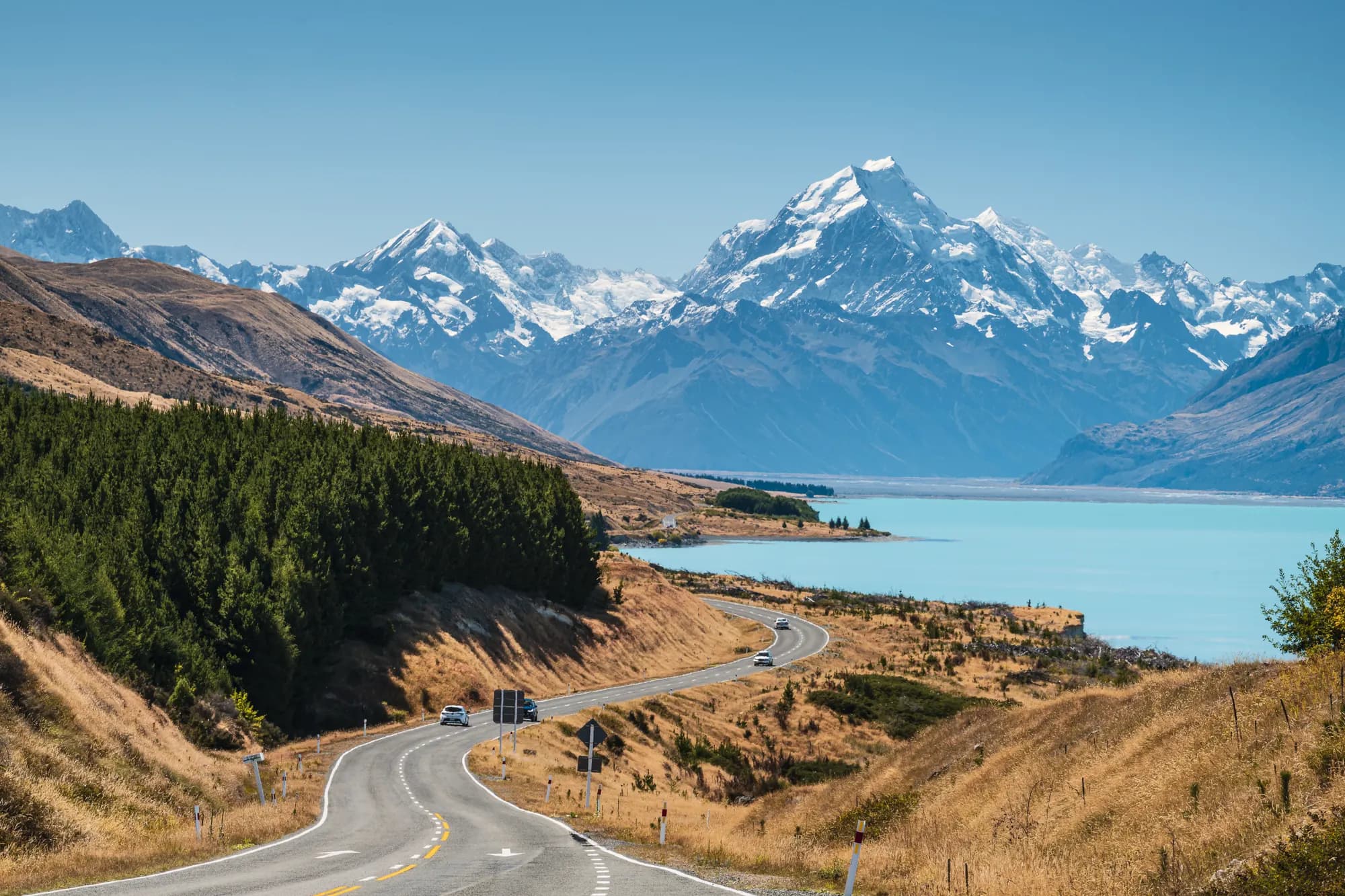
The best time to visit New Zealand is not the northern summer you might book by habit. The seasons run six months out of phase, and for most travellers February and March quietly beat the famous December peak.
The best time to visit New Zealand, answered
For most travellers, the best time to visit New Zealand is February and March. The country sits deep in the southern hemisphere, so its seasons run opposite to Europe and the Gulf: December is midsummer, July is midwinter. Late summer gives you the warmest sea, the most settled weather and the longest run of reliable days, without the crowds that fill the country from mid December to the end of January, when New Zealand's own school holidays are in full swing.
That is the honest catch with the obvious choice. Christmas and New Year look natural, and the weather is genuinely good, but you will share every beach and road with a nation on holiday, and rates rise to match. Wait five weeks and the country quietly empties: days still long, lakes at their warmest, vineyards moving towards harvest. If you are reading this in October, New Zealand is mid spring, and the February window sits at exactly the right distance to book well.
Why the seasons invert
New Zealand lies between roughly 34 and 47 degrees south, about as far below the equator as Italy or Japan sit above it. Everything you know about a European year still applies, just flipped by six months. January is August. April is October. The ski season runs from June to September. This sounds trivial until you try to plan: a traveller who books summer out of habit lands in the depths of a southern winter, which is a fine trip, but not the one they packed for.
The inversion is also an opportunity. When northern Europe is grey, New Zealand is at its best, which makes it one of the few long-haul answers to a northern winter that involves long evenings rather than short ones. A December or January departure trades a northern winter for a southern summer. For readers in the Gulf, the logic runs the other way too: New Zealand's spring and autumn line up neatly with the pleasant months at home, so the choice is about the trip itself, not escape.
The year, season by season
Summer runs from December to February: long days, water warm enough to swim, and everything open. It is also the busiest and most expensive stretch, particularly the school-holiday core. Autumn, March to May, may be the country's most beautiful season. Central Otago turns gold, the vineyards harvest, and the weather in March and early April is often steadier than midsummer. By May the south is cold at night and the light is low and lovely.
Winter, June to August, belongs to the mountains: ski fields around Queenstown and Wanaka, snow along the Southern Alps, and some of the clearest night skies anywhere. The North Island stays mild but wet. Spring, September to November, is the wildcard: waterfalls at full volume, lambs everywhere, and weather that can serve four seasons in an afternoon. It rewards flexible plans and punishes rigid ones. Crowds stay low until late November, when the season proper begins.
| Months | Season | Best for |
|---|---|---|
| December to February | Summer | Beaches, long days, peak crowds |
| March to May | Autumn | Harvest, gold colour, settled starts |
| June to August | Winter | Snow, stargazing, quiet roads |
| September to November | Spring | Waterfalls, lambs, changeable skies |
The case for February and March
February and March are, for us, the best time to visit New Zealand, and the reasoning is plain. The sea reaches its warmest in February, a beat after the air does. The schools are back, so the coastal towns breathe again. March brings harvest to Marlborough and Central Otago, and the settled autumn highs that make the South Island's roads such a pleasure. This is the shoulder-season logic we keep returning to, and the fuller argument sits in why shoulder seasons reward travellers.
The trade-offs are small but real. Days shorten noticeably through March, so the late-evening light of December is gone. The far south cools first: by late March, Fiordland and Stewart Island want a proper jacket. And late summer occasionally inherits the tail end of a tropical system in the north, which can mean a wet few days on the Coromandel while the South Island stays dry. None of this outweighs the quiet. It simply argues for keeping the itinerary loose enough to swap days around.
Winter, and who it suits
If you want snow, June to September is the season, with July and August the most reliable. Queenstown and Wanaka become alpine towns in the proper sense, and the Southern Alps put on their full display. Winter is also when the Aoraki Mackenzie dark-sky reserve earns its reputation: long nights, dry air, and, on a good night in the far south, a chance of the southern lights. Crowds are thin outside the ski towns, and the light for photography is the best of the year.
Be honest with yourself about what winter involves. Fiordland is one of the wettest places on earth, and its winter is dark and cold, though Milford Sound with fresh snow above the water is a serious argument in its favour. Driving needs more care and more time. And this is a soft winter by northern standards: if what you actually want is the deep, guaranteed kind, what a Lapland winter actually involves is the more honest comparison. New Zealand's winter is for mountains and skies, not sleigh rides.
The distance changes the maths
New Zealand is about seventeen hours from Dubai on a direct flight, and further from almost everywhere else. That number should shape the trip more than any seasonal chart. A week is too short: you will spend a fifth of it in the air and much of the rest recovering. Two weeks is the sensible minimum, three is better, and the difference between a good New Zealand trip and a great one is usually the number of one-night stops you were talked out of.
Distance also settles the island question. On a first trip of two weeks, most people are happier committing to one island properly than sampling both thinly, and the South Island usually wins the toss for scenery, the North for warmth and culture. This is the argument for fewer places and longer stays made concrete, and we make the same case at greater length in fewer places, longer stays. Go far, go long, go slow. The country repays all three.
How JMJ plans New Zealand
We start with the date and work backwards. If your window is fixed, February and March get first refusal. If it is not, we ask what you want the country to be doing when you arrive, snow, harvest or high summer, and choose the month to match. Then we build the route to the calendar: north first in spring, south first in autumn, and always fewer beds than the map suggests. New Zealand punishes ambition and rewards patience, and the itinerary should look like it knows that.
Because the flight is long and the seasons invert, timing mistakes here cost more than they do for closer destinations, so this is a trip worth planning early: the best lodges and guides in the quiet months book out further ahead than the country's relaxed reputation suggests. Tell us your dates, or better, your appetite, through our enquiry page, and we will tell you honestly whether the month you have in mind is the right one, and what to do if it is not.
Frequently asked
What is the best time to visit New Zealand?
February and March, for most travellers. The weather is at its most settled, the sea is at its warmest, and the December and January crowds have gone home because New Zealand's school holidays end in late January. December and January offer marginally longer days but far more people. If your priority is snow, invert the advice: July and August are the heart of the ski season.
What is the worst time to visit New Zealand?
There is no truly bad month, but the trickiest stretch runs from mid December to late January, when domestic holidays put pressure on rooms, roads and restaurants, and rates climb to match. Early spring, September and October, is the least predictable for weather: beautiful one day, four seasons the next. Neither ruins a trip. Both reward booking further ahead and building slack into the route.
Is December a good time to visit New Zealand?
Early December is genuinely good: summer has arrived but the school holidays have not, so you get long days without the peak crowds. From mid December through January the country is on holiday with you, and the coastal spots fill quickly. If December is your only window, book early and favour the first half of the month, or lean on the quieter corners of the South Island.
When is the best time to visit the South Island?
February to early April. The South Island's summer arrives later and leaves sooner than the north's, so late summer and early autumn give it the steadiest weather, the golden turn of Central Otago and the vineyard harvest. Winter is superb if you ski or want dark skies, but expect short days and cold nights. Spring is dramatic and wet, with the waterfalls at their fullest.
What is the cheapest time to visit New Zealand?
Winter, outside the ski towns, along with the shoulder months of May and September, generally brings the softest rates and the widest choice of rooms. The trade is weather: May is cooling fast and September is changeable. February and March cost more than deep winter but carry far less pressure than the December peak, which is where demand, and therefore pricing, is strongest.
Is winter a good time to visit New Zealand?
Yes, for the right traveller. June to September brings reliable snow to the Southern Alps, quiet roads, sharp light and some of the clearest night skies in the world, with a chance of the southern lights in the far south. It is not a beach trip, days are short, and mountain driving needs patience. If your picture of New Zealand is lakes and hiking in shirtsleeves, aim for late summer instead.
How many days do you need in New Zealand?
Two weeks is the practical minimum once you account for the flights, and it is best spent mostly on one island. Three weeks lets you do both islands without rushing. Anything under ten days on the ground forces one-night stops and long driving days, which is the fastest way to turn the country into a windscreen. If a week is truly all you have, choose one region and stay put.
When can you see the southern lights in New Zealand?
The aurora australis is possible year round but most visible in winter, roughly May to August, when nights are longest and darkest. The far south gives the best odds: the Catlins, Stewart Island and the skies of the Aoraki Mackenzie dark-sky reserve. Displays are never guaranteed, so treat a sighting as a bonus on a stargazing trip rather than the reason for booking one.