
From when to go to where to stay and how long to spend: the considered way to plan a luxury Kenya safari, from the people who do it for a living.
Start with the wildlife, then the dates
A great safari is built backwards from what you most want to see. If the river crossings of the Great Migration are the dream, you are looking at late July to October in the Maasai Mara. If it is uncrowded plains, newborn animals and value, the green months early in the year reward you. The calendar is the first decision, not an afterthought.
We always ask that question first (crossings, big cats, elephants, or simply peace) because it quietly determines everything that follows: the region, the camps, and the rhythm of the days.
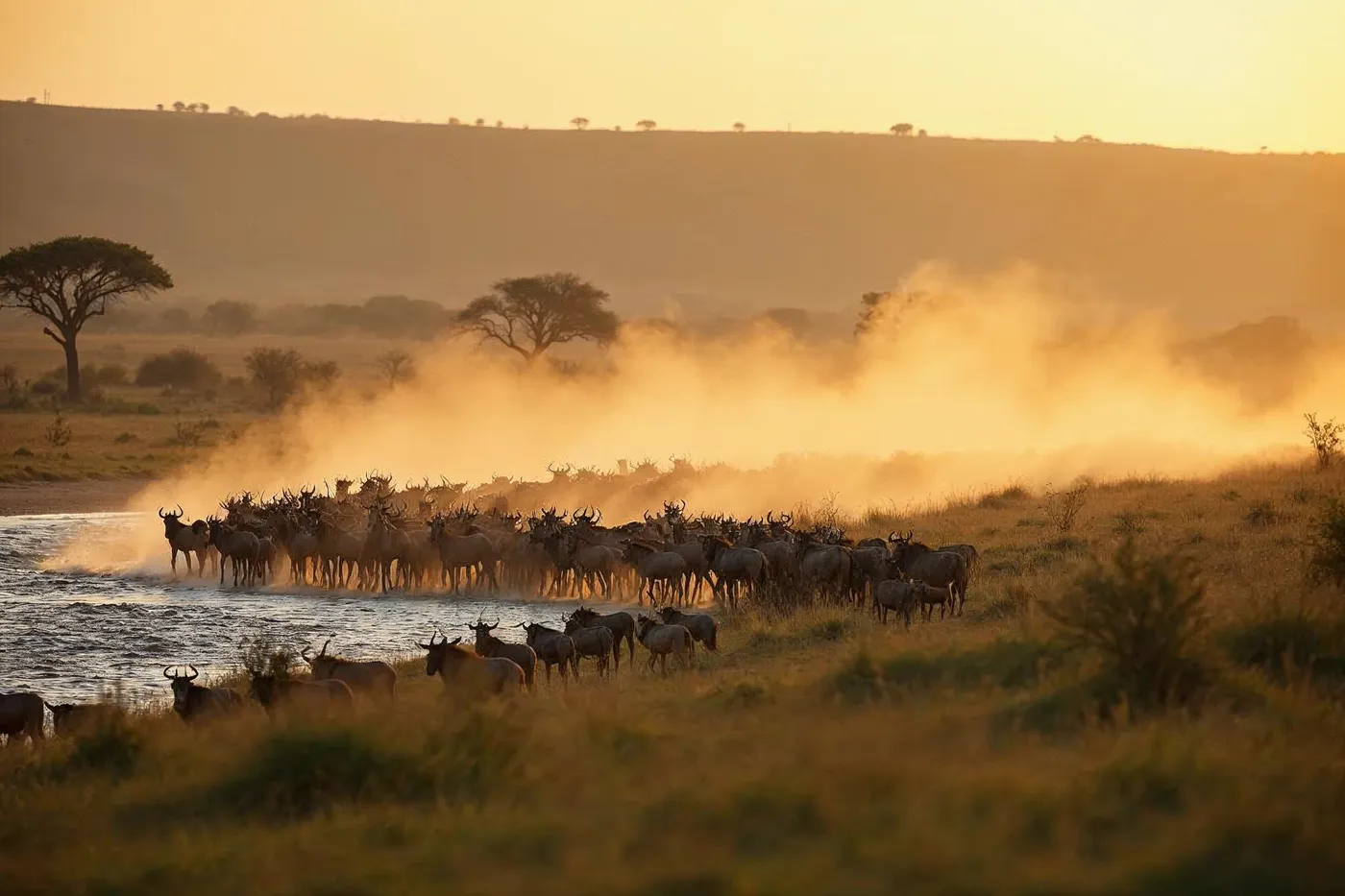
Choose conservancies over crowds
Kenya's quiet masterstroke is its private conservancies, which border the famous reserves. They cap vehicle numbers, and allow off-road driving, night drives and walking safaris, so you experience sightings with a handful of vehicles rather than a scrum. For most of our travellers, this single choice is what separates a good safari from the one you will still be telling stories about.
We usually pair a conservancy for exclusivity with time in the Mara itself for the sheer spectacle, and often a contrasting third region: Laikipia, Samburu or Amboseli beneath Kilimanjaro.
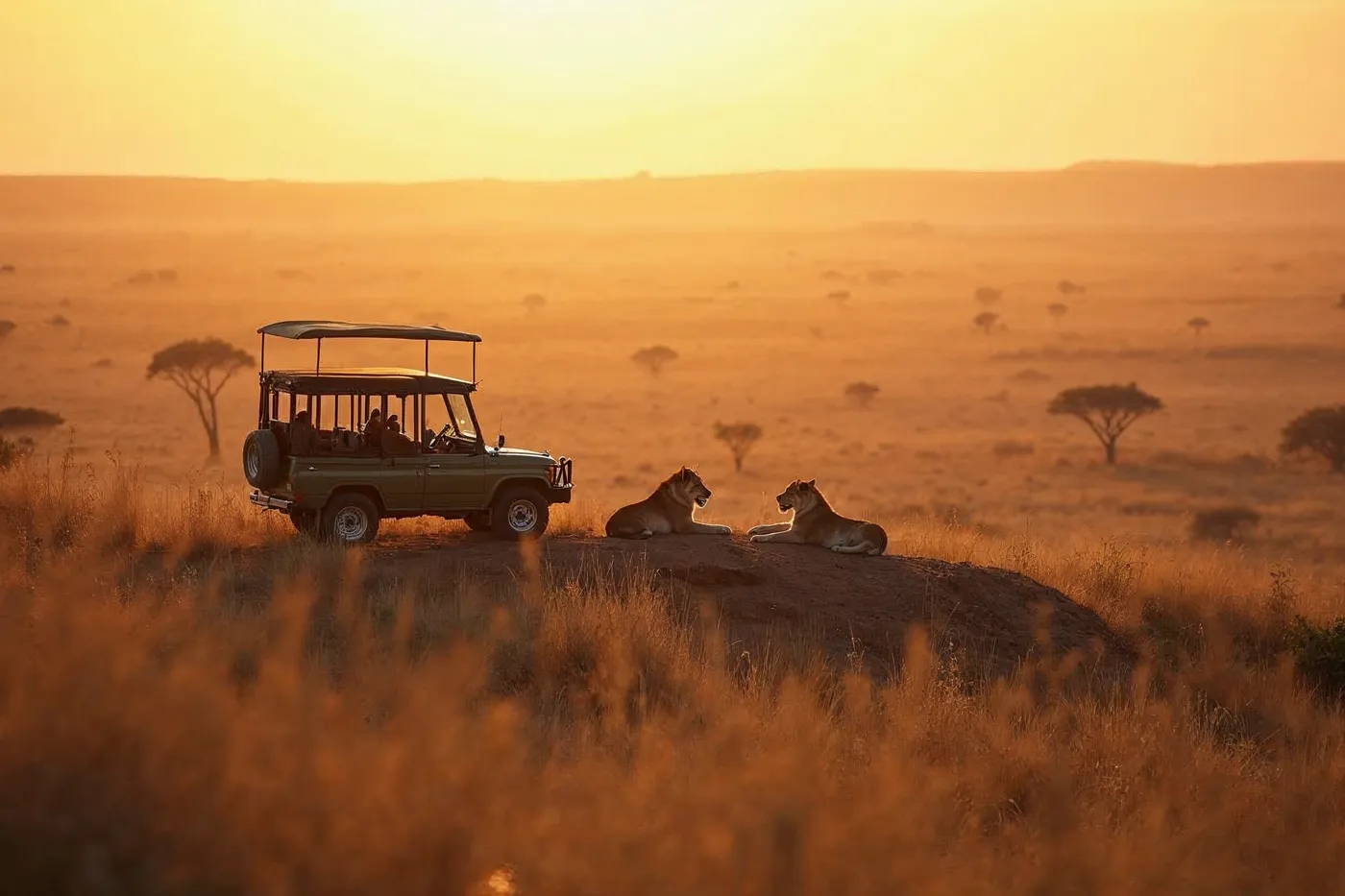
How long, and how to pace it
Seven to ten nights is the sweet spot: enough to settle into two or three areas without living on light aircraft. Fewer than five nights and you spend too much of the trip in transit; the magic of a safari is in the unhurried second and third mornings in one place.
We build in slower days too: a safari is not a checklist of drives but a rhythm of dawn starts, long lunches and golden-hour returns, with room to simply sit on your deck and watch the plain.
Getting there and getting around
Most luxury safaris move by light aircraft between camps: part of the romance, and a huge time-saver over the road. From the Gulf, Nairobi is an easy overnight or direct hop; from there, small planes carry you straight into the bush.
We handle the choreography (the connections, the luggage limits, the transfers) so the logistics stay invisible and you simply step from one camp to the next.
What it costs, and where it goes
Top-end camps broadly run from around US$1,000 to US$3,000 per person per night, all-inclusive. Much of that is access and exclusivity (small camps, superb guides, remote locations) and a meaningful share funds the conservancies and communities that keep these places wild.
We match the spend to what matters to you and never pad: sometimes one extraordinary camp beats three merely good ones. Tell us when you can travel and what you hope to feel out there, and we will shape the rest.
Frequently asked
How many days do you need for a Kenya safari?
Seven to ten nights is ideal: enough to pair a private conservancy with the Mara and perhaps a third region, without living on light aircraft. Five nights is a workable minimum.
What is the best area for a luxury safari in Kenya?
The private conservancies bordering the Maasai Mara offer the best mix of exclusivity and game, with off-road and night drives and few vehicles. We often combine one with the Mara reserve and a contrasting region like Laikipia or Amboseli.
How much does a luxury Kenya safari cost?
Top-end camps broadly run US$1,000–US$3,000 per person per night, all-inclusive, covering access, exclusivity, superb guiding and conservation fees. We match the budget to what matters most to you.
When is the best time to go?
Late July to October for the Great Migration river crossings; January–February and the green season for quieter, greener, better-value game viewing. The dry months are easiest for first-timers.