
The souks, the creek and the abra, before the heat and the crowds. How to spend an unhurried morning in the oldest part of the city, and what is worth seeing on each bank.
Start at Dubai Creek, the old trading waterway
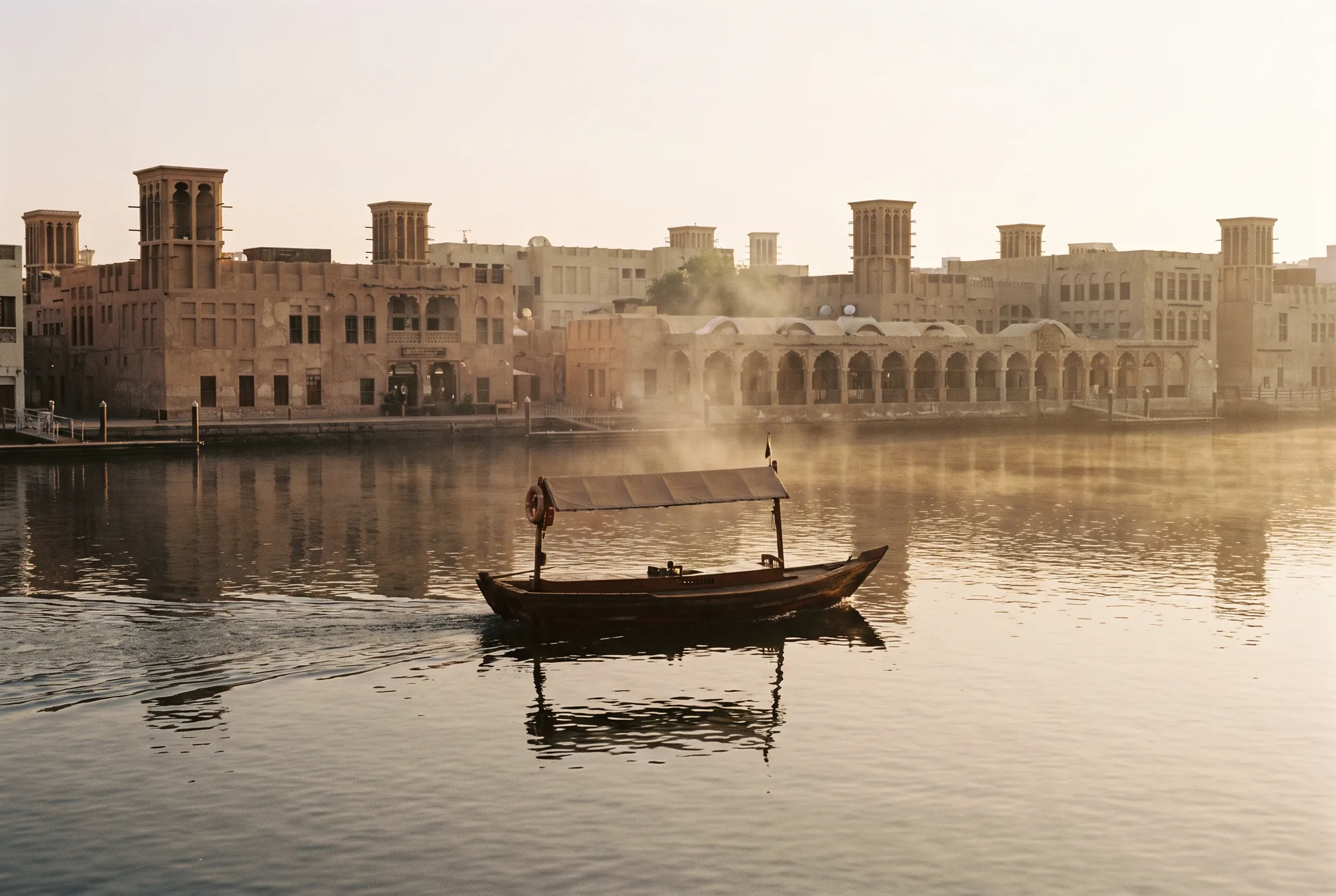
JMJ Experiences begins its Old Dubai mornings on the banks of Dubai Creek, the saltwater inlet that divides the city into Bur Dubai and Deira and served as its first trading harbour. The souks here still open early, before the heat and the crowds. A crossing on the abra, the traditional wooden water taxi, costs a nominal fare and takes only a few minutes. This is the Dubai that predates the towers, and it rewards an unhurried morning.
Dubai Creek, known in Arabic as Khor Dubai, is a natural saltwater inlet that runs inland from the Gulf and divides the old city into two halves: Bur Dubai on the south bank and Deira on the north. This is where the town began, as a pearling and trading harbour, long before the skyline. Come early and the water is still, the light is low, and the working dhows are already loading at the wharfage.
| Place | What it is | Where |
|---|---|---|
| Dubai Creek (Khor Dubai) | Saltwater inlet and the city's historic trading harbour | Between Bur Dubai and Deira |
| Deira Gold Souk | Covered lanes of gold and jewellery traders | Deira, north bank |
| Deira Spice Souk | Open-sack stalls of spice, dried fruit and incense | Deira, beside the gold souk |
| Perfume souk (parfum souk) | Merchants blending oud and attar to order | Deira, near the gold lanes |
| Textile / old souk | Shaded arcade of fabric and tailoring | Bur Dubai, by the abra station |
| Al Fahidi (Bastakiya) | Restored wind-tower quarter, galleries and museums | Bur Dubai, near the creek |
| The abra | Traditional wooden water taxi across the creek | Crosses for a nominal fare |
| Dhow wharfage | Working moorings for cargo dhows | Deira creekside |
Cross on the abra, Dubai's wooden water taxi
The abra is a small wooden boat that has ferried people across Dubai Creek for generations, and it remains the simplest way to cross between the two banks. You board at a creekside station, sit on the central bench, and pay a nominal fare in cash. The crossing takes only a few minutes, low to the water, with the souks rising on either side. Abra boats run continuously through the day, leaving when the seats fill rather than to a fixed timetable.
The Deira Gold Souk and Spice Souk
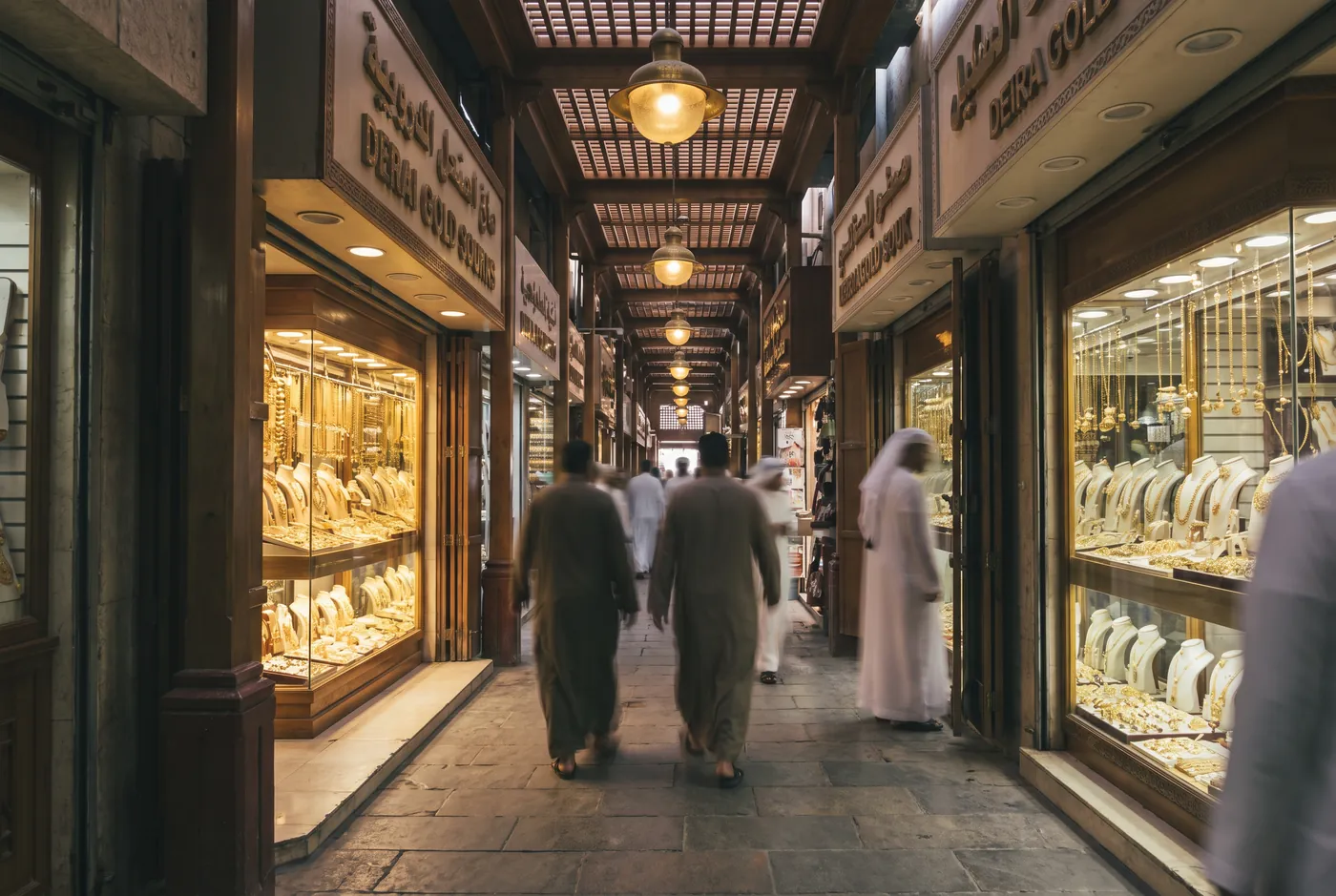
On the Deira bank, the gold souk is a covered warren of shopfronts where jewellers display gold by the window-full, and prices track the daily weight rather than a fixed tag. A few lanes away, the spice souk fills the air with saffron, dried lime, frankincense and cardamom, sold from open sacks. Both reward slow walking and quiet questions. Arrive soon after opening and you will often have the lanes to yourself.
The perfume souk and the old textile souk
Beside the gold lanes sits the perfume souk, the dubai parfum souk, where merchants blend oud and attar to order and decant scent from cut-glass bottles. Back across the water in Bur Dubai, the textile souk, sometimes called the old souk, is a shaded arcade of folded silk, cotton and tailoring. Neither is a museum. Both are working markets, and a morning visit means you meet the traders before the day fills.
Al Fahidi historical neighbourhood
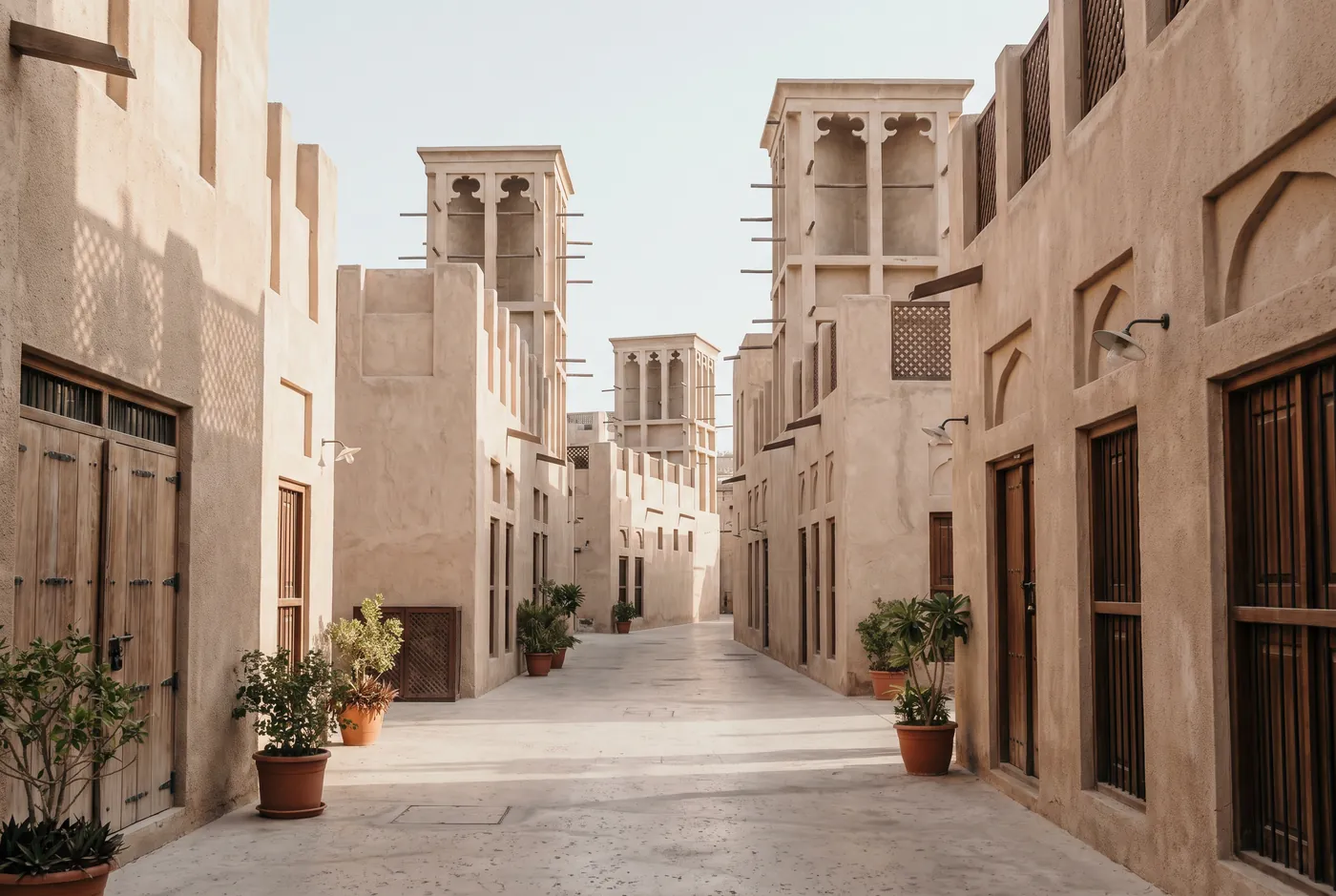
A short walk from the Bur Dubai abra station, the Al Fahidi historical neighbourhood, once known as Bastakiya, is the restored quarter of coral-and-gypsum houses topped with wind towers, the region's early answer to air conditioning. Narrow lanes open onto small courtyards, galleries, cafes and the city's history museums. It is the quietest corner of Old Dubai in the morning, and the most walkable.
The best time for a quiet morning
Old Dubai is busiest in the late afternoon and evening, when tour groups and cruise stops arrive. The souks are calmest in the first hour after they open, and the winter months from November to March are the most comfortable underfoot. Plan the morning in one loop: creek, abra, souks, and Al Fahidi, all within an easy walk and one short crossing.
Frequently asked
What are the Gold Souk's opening hours?
The Deira Gold Souk generally trades from mid-morning until late in the evening, with many shops pausing for a few hours in the early afternoon. Hours vary by stall and by season, and Friday mornings are the quietest. Arrive soon after opening for calm lanes and unhurried browsing.
How much does an abra ride across Dubai Creek cost?
An abra crossing of Dubai Creek costs only a nominal fare, paid in cash to the boatman as you board. The wooden boats run between the Bur Dubai and Deira stations and take a few minutes each way. A longer private hire is also possible for an agreed sum.
What are the abra timings on Dubai Creek?
Abras cross Dubai Creek throughout the day and into the late evening, running whenever enough passengers gather rather than to a fixed timetable. The public route boats depart almost continuously, so there is rarely a long wait. Early morning offers the calmest water and the softest light for photographs.
Where do you catch the abra in Bur Dubai?
You catch the abra in Bur Dubai at the marked abra station on the creek beside the textile souk, a short walk from Al Fahidi. Boats leave for Deira as soon as the bench seats fill. The Deira station sits on the opposite bank, close to the gold and spice souks.
How do you get to the Gold Souk?
You reach the Deira Gold Souk most easily by taking the Dubai Metro Green Line to Al Ras or Baniyas Square, then walking a few minutes into the souk lanes. From Bur Dubai, the abra across the creek lands you close by. Taxis stop at the main entrances.
What is there to see in Old Dubai?
Old Dubai centres on Dubai Creek, the souks of Deira, and the restored Al Fahidi historical neighbourhood in Bur Dubai. Spend a morning on the gold, spice and perfume souks, cross by abra, and walk the wind-tower lanes and museums of Al Fahidi. Dubai Creek Park sits further along the same water.
When is the best time to visit the souks in Dubai?
The best time to visit the souks in Dubai is early morning, soon after the shops open, when the lanes are cool and quiet before the tour groups arrive. The winter months, roughly November to March, bring the most comfortable temperatures. Friday mornings are quieter than the rest of the week.
Which souks are in Old Dubai?
Old Dubai holds several traditional souks: the Deira Gold Souk, the Deira Spice Souk, and the perfume souk on the north bank, with the textile or old souk in Bur Dubai on the south bank. Each occupies its own covered lanes, all within walking distance of the creek.