
The best time to visit Laos is November to February, and the whole country knows it. Here is what that means for booking, what the green season offers instead, and how the rivers set the calendar.
The best time to visit Laos, answered first
The best time to visit Laos is November to February. The rains have finished, the air is dry and clear, and the mornings in Luang Prabang are cool enough for a jumper. Daytime temperatures sit in the high twenties rather than the high thirties, the Mekong still carries enough water from the wet season for river travel, and the countryside has not yet browned off. If you can only travel in one window, this is the window.
The catch is that everyone else knows this too. Luang Prabang is a small town, and in December and January its best rooms go months in advance, its morning alms ceremony draws a crowd, and its cafes fill by nine. Laos never feels busy the way Bangkok or Hoi An can, but the gap between booking six months out and six weeks out is the difference between the room you wanted and the room that was left.
November to February, in detail
Within the dry season there are grades. November is the quiet overachiever: the land is still green from the rains, the rivers are full, and the crowds have not fully arrived. December and January bring the coolest, clearest days, and in the northern mountains the nights genuinely drop, sometimes into single figures around Phonsavan and the high country, so pack a layer. February stays dry and begins to warm, and by its final week the first heat of the hot season is already in the air.
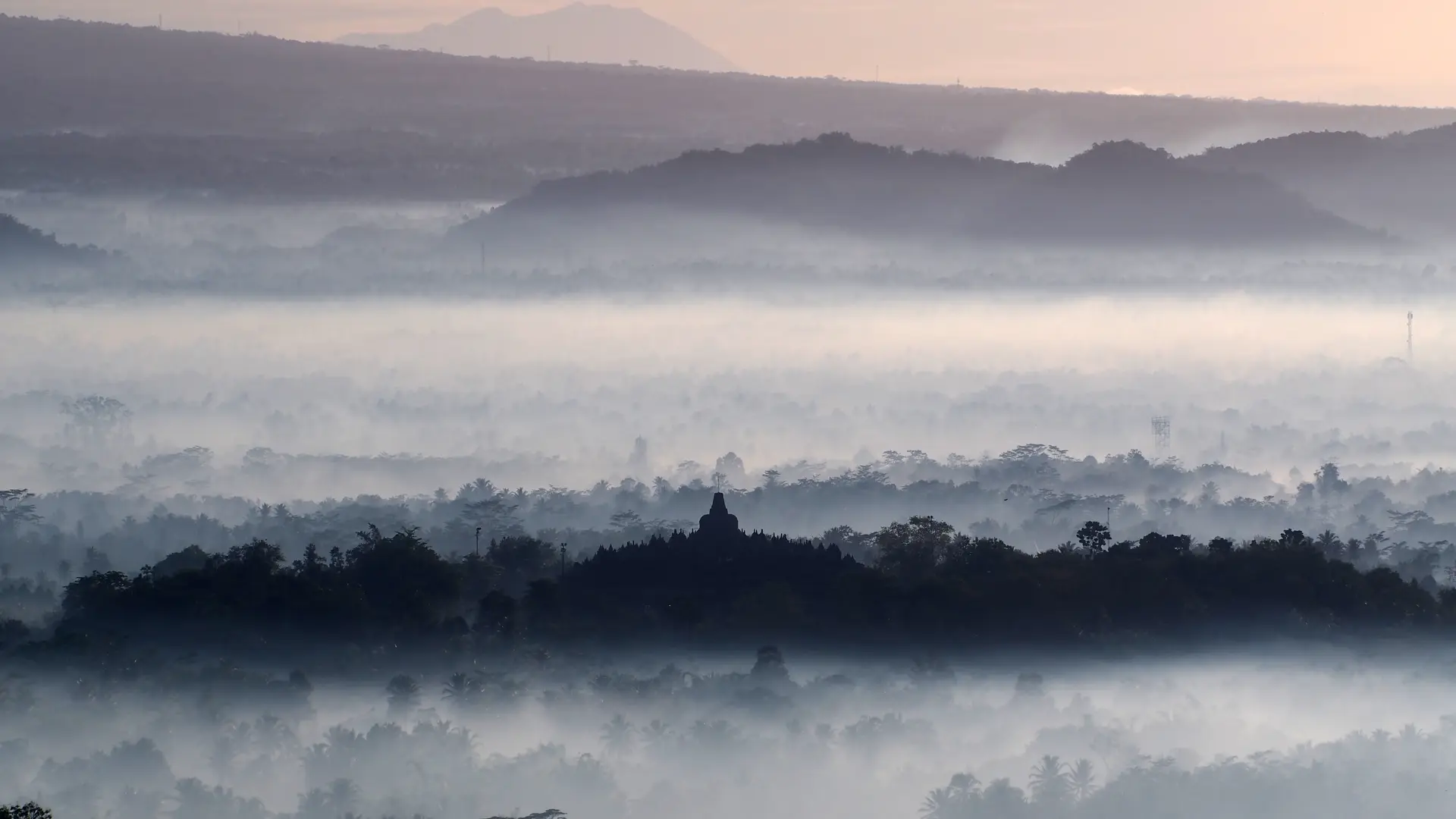
This is the window we recommend for first visits, for anyone combining Laos with Thailand or Vietnam, and for travellers who want the photographs the country is known for: mist on the Mekong at dawn, gold temple roofs against a blue sky. It also suits couples; Laos has quietly earned a place on the honeymoon shortlist for 2026 precisely because it offers privacy without effort in these months. Book early and the season asks nothing else of you.
March and April, the honest gap
March and April are the months we plan around rather than towards. This is the hot season: temperatures climb towards forty in the lowlands, the rivers fall to their lowest, and across much of mainland Southeast Asia the agricultural burning season puts a haze in the air that flattens views and photographs alike. The mountains that define northern Laos can disappear into a grey-white sky for days. None of this makes travel impossible; it makes it a compromise.
If April is your only option, head south rather than north. The haze is generally lighter below Vientiane, and the Bolaven Plateau sits high enough to take the edge off the heat. April also brings Lao New Year, when the whole country celebrates with water, an experience in itself if you arrive knowing you will get soaked. Just do not build the trip around mountain views or river journeys in these weeks, because the country cannot deliver them then.
The green season case, May to October
From May the rains return, and with them the version of Laos that the postcards are actually taken from: rice terraces flooded to a mirror, waterfalls at full volume, hills a saturated green. The rain itself is more considerate than its reputation. For most of the season it arrives as an afternoon or overnight storm, loud and brief, rather than a wet week. August and September are the exception, when downpours can settle in for longer and some rural roads slow down.
The reward is a country with room in it. Rooms cost less, the famous waterfalls near Luang Prabang run at their fullest, and the light after rain is the best of the year. We have written before about why shoulder seasons reward travellers, and Laos may be the strongest case in Asia: the trade-off is a wet afternoon, and the return is having Kuang Si or Wat Xieng Thong nearly to yourself.
| Months | Weather | The honest catch |
|---|---|---|
| November to February | Cool, dry, clear skies | Peak demand; book early |
| March to April | Very hot, hazy, rivers low | Views and boats suffer |
| May to July | Hot, brief afternoon storms | Humidity, but few crowds |
| August to October | Heaviest rain, rivers full | Some rural roads slow |
The river calendar
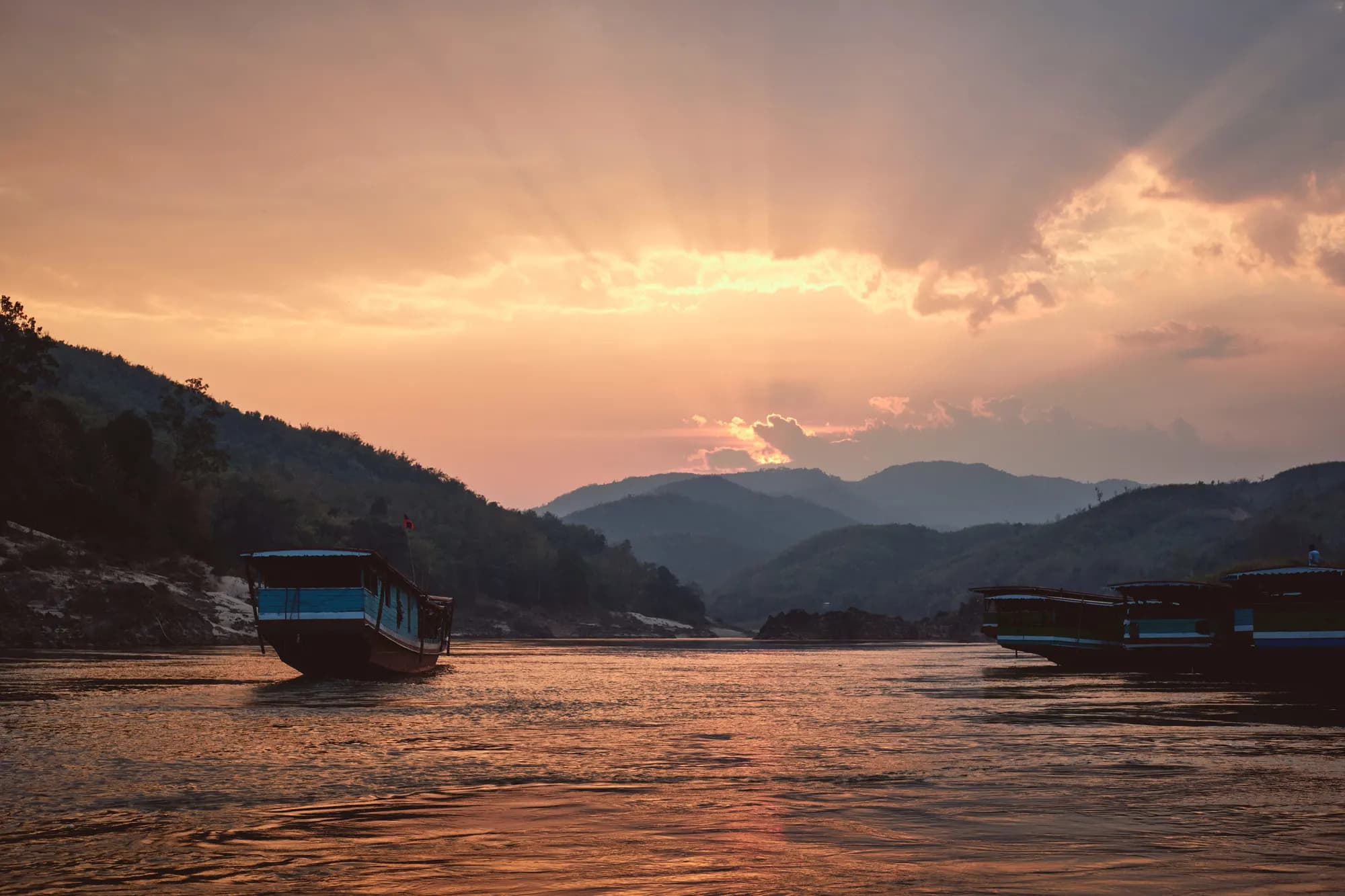
The Mekong sets its own schedule, and it does not match the tourist one exactly. The river runs highest from August to October, at the tail of the rains, and holds a good level through November and December. By late February it is dropping, and from March to May the upper Mekong can run low enough that longer boat journeys become slower, bumpier or occasionally curtailed. If a river journey is the point of the trip, aim for November to January: full water, dry sky.
The slow boat between the Thai border and Luang Prabang remains one of the great two-day journeys anywhere, and it is the purest expression of what Laos does well, which is nothing, at four knots, past everything. It rewards travellers who have made peace with the case for fewer places, longer stays. A private charter follows the same water on the same calendar, just with better chairs, so the season logic holds at every budget.
North and south are different answers
Laos runs a thousand kilometres top to bottom, and the seasons do not land evenly along it. The north, Luang Prabang, Nong Khiaw and the mountains, has the biggest winter reward and the harshest April. The south, Champasak, the Bolaven Plateau and the Four Thousand Islands, stays warmer in December, suffers less haze in spring, and turns extraordinary in the late wet season, when the Mekong spreads wide and the great falls at Khone Phapheng run at full force.
There are no direct flights from most long-haul hubs, so Laos is usually reached through a neighbour: about six hours from Dubai to Bangkok, then a short connection to Luang Prabang or Vientiane. That routing is why Laos so often follows Thailand on the same trip, and it is worth planning both legs against the same season, since the two countries broadly share a calendar: dry and cool from November, hot from March, green from May.
How JMJ plans a Laos trip
Every conversation about the best time to visit Laos ends the same way, with the window you actually have rather than the one the guidebooks prefer. Given November to February, we book Luang Prabang first and early, because that is where the season's pressure concentrates, then build the river journey and the countryside around it. Given the green season, we plan mornings for the big sights, keep afternoons flexible, and choose places to stay where a rainstorm is something to watch rather than something to wait out.
Laos rewards unhurried planning the way it rewards unhurried travel, so the earlier the conversation starts, the better the trip tends to be. If you are weighing a dry-season trip against a green-season one, or trying to fit Laos alongside Thailand or Vietnam in a single journey, tell us the dates you are working with through our enquiry page and we will tell you honestly what each window can and cannot give you.
Frequently asked
What is the best time to visit Laos?
November to February is the best time to visit Laos. The rains have ended, skies are clear, daytime temperatures sit in the high twenties, and the rivers still hold enough water from the wet season for boat journeys. The countryside is green early in the window and the northern mountains are pleasantly cool. The only real drawback is demand: the best rooms in Luang Prabang book out months ahead in December and January.
When is the rainy season in Laos?
The rains run from roughly May to October, building through the summer and peaking in August and September. For most of the season the rain falls as short, heavy afternoon or overnight storms rather than all-day washouts, so mornings are often clear. Rivers rise steadily, waterfalls reach full volume, and the landscape turns intensely green. Late in the season some rural roads become slow going, which matters more for remote areas than for the main routes.
Is it worth visiting Laos in the green season?
Yes, provided you plan around the rain rather than pretend it will not come. From May to October you get the greenest landscapes of the year, full waterfalls, softer light, lower prices and far fewer travellers at the major sights. The sensible pattern is to do the important things in the morning and keep afternoons loose. August and September carry the highest chance of prolonged rain, so May to July is the gentler half of the season.
What is the worst time to visit Laos?
March and April are the most difficult months. This is the hot season, with lowland temperatures pushing towards forty, and it coincides with regional agricultural burning that leaves a haze over much of the north, dulling mountain views and photographs. Rivers also run at their lowest, which can affect longer boat journeys. If those weeks are your only option, favour southern Laos, where the haze is lighter and the Bolaven Plateau offers some altitude and relief.
When is the best time to visit Luang Prabang?
November to February. Luang Prabang sits in a river valley in the north, and in these months it gets cool misty mornings, dry warm days and clear evenings, the conditions the town is loved for. December and January are the sweet spot for weather and the peak for demand, so book well ahead. November offers nearly the same conditions with greener surroundings and slightly fewer people, which makes it our favourite single month.
When should I take the slow boat on the Mekong?
November to January is the most reliable window: the river still carries plenty of water from the wet season while the skies stay dry and visibility is at its best. August to October offers the highest water and dramatic scenery but comes with rain. From March to May the upper Mekong runs low, journeys slow down and the experience loses some of its ease, so avoid planning a river trip in those months if you can.
Is December a good month to visit Laos?
December is one of the two or three finest months of the year in Laos. Expect dry, sunny days, cool nights, clear air and rivers still running well. It is also the busiest month, particularly in Luang Prabang over the holiday weeks, so the earlier you commit the better your choice of rooms and guides. Pack a warm layer for the north, where nights in the mountains can turn genuinely cold.
What is the best time to visit southern Laos?
The south runs on a slightly gentler version of the same calendar. November to February is dry and comfortable, and warmer than the north in midwinter. The late wet season, September to November, is when the Four Thousand Islands region is at its most impressive, with the Mekong spread wide and the big waterfalls at full force. The Bolaven Plateau's altitude keeps it cooler year round, which softens the hot season there.