
The best time to visit Fiji is May to October, which is also Fiji's winter, the detail brochures rarely explain. Here is what that means for warmth, rain, crowds and cost, and when the wet season still earns its keep.
The short answer on the best time to visit Fiji
The best time to visit Fiji is May to October. That is the dry season: daytime temperatures in the mid to high twenties, low humidity by tropical standards, and the steady south-east trade winds that keep the afternoons comfortable. Rain still falls, because this is the South Pacific, but it arrives as short passing showers rather than the long grey systems of the wet months. If you want the highest odds of clear days, calm seas and easy connections between islands, book inside that window and the weather will mostly cooperate.
The catch is that this window is no secret in the southern hemisphere. May to October is winter in Australia and New Zealand, which sit three or four hours' flight away, and Fiji is their default warm escape. July, August and the school-holiday weeks of September are the busiest and most expensive stretch of the year. The dry season is the right answer, but it is not one answer: the difference between early May and late July is the difference between a quiet island and a full one.
Why Fiji's best weather is its winter
Here is the part most brochures skate past: Fiji's finest weather is its winter. The islands sit south of the equator, so June, July and August are the coolest months of the year, and the cool is precisely what you are buying. Humidity drops, mosquitoes thin out, nights ask for a light layer rather than air conditioning, and the light turns clean and sharp. Travellers from the northern hemisphere often assume they are booking a tropical summer. They are booking the opposite, and it is better.
Winter does not mean cold water. The sea around Fiji holds between roughly 25 and 29 degrees Celsius all year, so swimming in July feels much like swimming in January, minus the humidity when you climb out. What winter does bring is calmer seas and clearer water, which matters if snorkelling or diving is the point of the trip. Visibility on the reefs is generally at its best from July to September, when the plankton blooms of the warmer months have settled and the trade winds keep the surface orderly.
The wet season, read honestly
November to April is the wet season, and it deserves an honest reading rather than a warning label. Temperatures climb towards the low thirties, humidity settles in, and rain tends to arrive as heavy afternoon downpours rather than week-long washouts. It is also cyclone season across the South Pacific, which means a small but real chance that a storm system disrupts a given week, particularly from January to March. Travel insurance and a flexible attitude are not optional extras in these months; they are part of the plan.
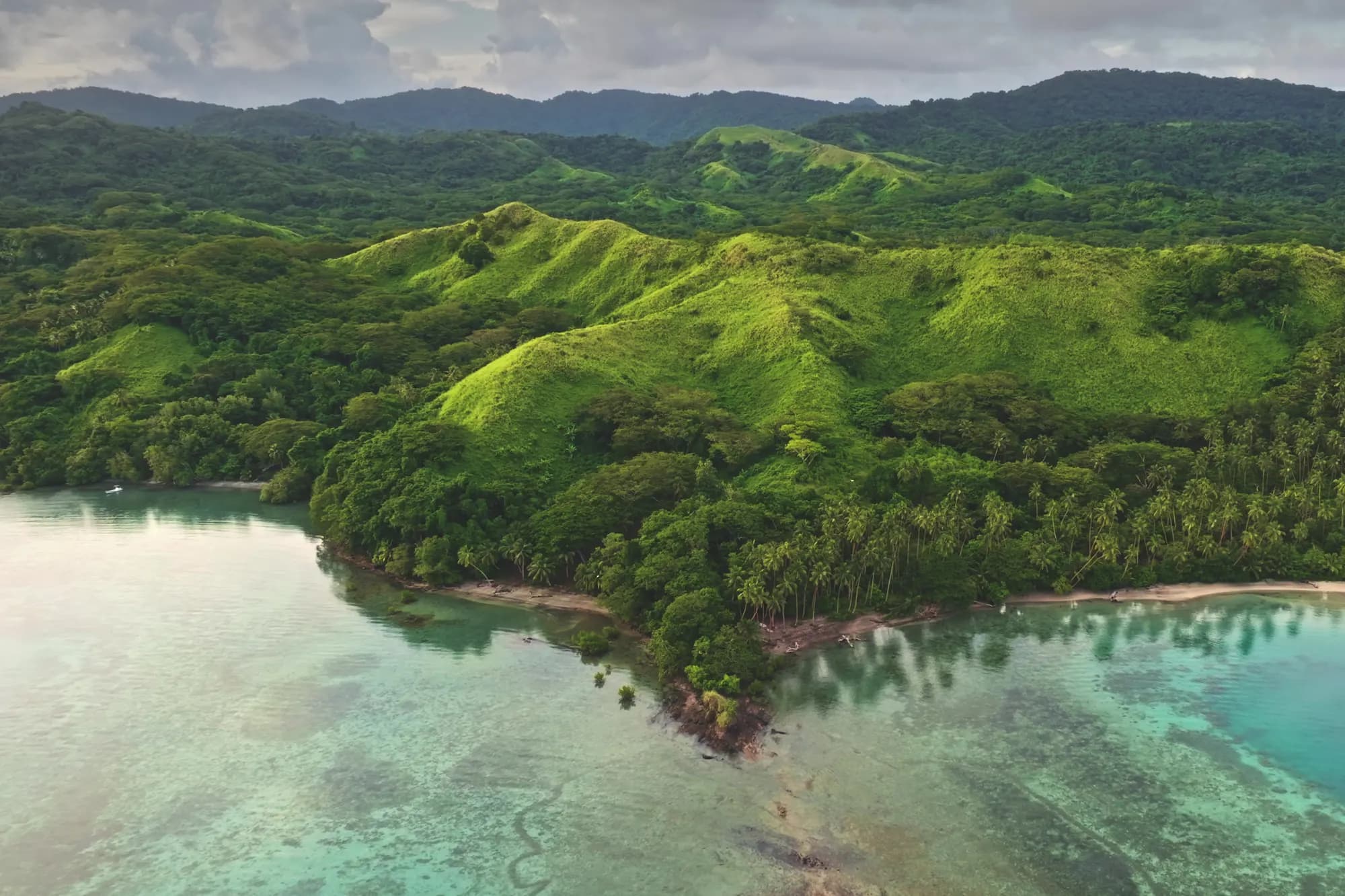
The reward is a different Fiji. The islands turn a deeper green, the fruit is at its best, and the beaches empty out once the holiday crowds go home in mid-January. Room rates and flight fares ease noticeably, and the case for why shoulder seasons reward travellers applies here in full. If your dates are fixed to November, early December or April, the edges of the wet season, you will usually get long bright mornings, a dramatic hour of rain, and a resort operating at half hum.
Where you stay changes the weather
Fiji's weather is not evenly distributed, and this is the detail that rescues many fixed-date trips. The main island, Viti Levu, has a mountainous spine that catches the prevailing trade winds. The eastern side, around Suva, takes most of the rain, roughly twice what the west receives in a typical year. The western side, where the international airport at Nadi sits, lies in the rain shadow, and the small island chains offshore to the north-west are drier still. Most of the classic postcard islands are, conveniently, in the dry half.
Use that geography when the calendar will not move. A January trip weighted towards the western islands sees far less rain than the national statistics suggest. A July trip can afford to be more ambitious: the interior highlands, the waterfalls of the wetter garden islands to the north-east, and the reef passages that need settled seas all come into play. The best time to visit Fiji, in other words, depends partly on where in Fiji you intend to be, and a good itinerary is built around that.
| Months | Weather | The trade-off |
|---|---|---|
| May to mid June | Dry, mid twenties, fresh green | Quietest fine weather of the year |
| Late June to August | Driest and coolest months | Peak demand from school holidays |
| September to October | Warm, settled, clear water | Busy again in the late September break |
| November to mid December | Humidity building, some storms | Soft rates before the holiday surge |
| Mid December to April | Hot, wet afternoons, cyclone risk | Greenest islands, emptiest beaches |
Crowds, holidays and the two quiet windows
Crowds in Fiji follow the school calendars of Australia and New Zealand more than anything else. The late June to mid July holidays and the late September to early October break are the two busiest pulses of the dry season, when family resorts fill and inter-island seats tighten. If you are travelling without children, those are the exact weeks to avoid, and if you are travelling with them, book far earlier than feels reasonable. Christmas and New Year bring a second, shorter surge despite sitting in the wet season.
That leaves two quiet windows inside or beside the fine weather: May to mid June, and late October into early November. Both offer dry-season conditions at shoulder-season pace, and both suit couples especially well, which is why Fiji keeps its place on the honeymoon shortlist for 2026. May has the edge on paper, with the freshest landscape after the rains and the longest run of settled weather ahead of it. Late October gambles a little more on humidity, and is rewarded with the emptiest beaches of the dry half.
How JMJ plans a Fiji trip
Fiji's real cost is distance. From Dubai it is roughly twenty hours of travel with at least one stop, and from Europe longer still, which is why we rarely plan it as a week. Ten nights is the sensible floor, two weeks is better, and the trip rewards the case for fewer places, longer stays: one island lived in properly beats four islands glimpsed between transfers. Crossing that much of the planet for a hurried itinerary is the one mistake the season cannot fix.
When we plan Fiji, we start with your dates and work the geography around them: west-leaning itineraries for wet-season months, wider-ranging ones for the dry, and the quiet May or late-October windows whenever the calendar allows. We hold inter-island connections with generous margins, because a missed seaplane matters more than a missed dinner. If Fiji is on your list for 2027, or the dates you have are awkward and you want an honest read on them, tell us through the enquiry page and we will map the season to the trip you actually want.
Frequently asked
When is the best time to visit Fiji?
May to October, Fiji's dry season and its southern-hemisphere winter. Expect daytime temperatures in the mid to high twenties, low humidity, calm seas and short showers rather than long rains. Within that window, July and August are the driest but also the busiest, while May to mid June and late October offer the same weather with fewer people. The sea stays warm enough to swim all year.
What is the best time to visit Fiji for a honeymoon?
May to mid June, or late October to early November. Both sit at the quiet edges of the dry season, so you get reliable weather without the school-holiday crowds. May follows the rains, so the islands are at their greenest; late October tends to have the emptiest beaches. Even in these quieter windows, book the best rooms several months ahead, because the most sought-after ones are few and they go first.
What is the wet season in Fiji like?
November to April is hot and humid, with rain that usually arrives as heavy afternoon downpours rather than continuous grey days. It is also the South Pacific cyclone season, with the highest likelihood of storms from January to March, so flexible bookings and proper travel insurance matter. In exchange the islands are lush, quiet and noticeably better value, and the drier western side of Fiji often escapes the worst of it.
Is the best time to visit Fiji the same across the whole country?
No. Viti Levu's mountains split the weather: the eastern side around Suva receives roughly double the rain of the west, where Nadi and most of the well-known offshore island chains sit. In the wet season that difference is decisive, and an itinerary weighted to the western islands can work well even in January or February. In the dry season the whole country opens up, including the wetter, waterfall-rich islands.
What is the cheapest time to visit Fiji?
The wet season, broadly November to April, excluding the Christmas and New Year weeks, which spike regardless of weather. Late January to March generally brings the softest room rates and airfares of the year, in exchange for heat, humidity and the possibility of storm disruption. If you want value with better odds on weather, aim for May or November, when shoulder pricing overlaps with more settled conditions.
When is the best time to visit Fiji for snorkelling and diving?
July to September, when the trade winds have settled the seas and underwater visibility is at its seasonal best. Water temperature is not the issue, since it stays warm all year, but clarity and calm surface conditions are markedly better in the heart of the dry season. The warmer months from November to April bring more plankton and lower visibility, though they also bring their own marine life in numbers.
How far ahead should I book a dry-season trip to Fiji?
For July, August or the late September school-holiday weeks, six to nine months ahead is realistic if you want specific rooms and smooth inter-island connections, and earlier for larger family groups. For the quieter windows of May, early June and late October, three to five months is usually enough. Wet-season trips can be arranged closer to departure, and benefit from flexible tickets.
Is Fiji worth visiting in December?
Early December is one of the quieter bargains of the calendar: the wet season has technically begun, but conditions are often still pleasant, resorts are calm and rates are soft before the holiday surge. From mid December to early January, Christmas and New Year demand fills the islands despite the weather, so book early and expect peak pricing. If your December is flexible, take the first half of the month.