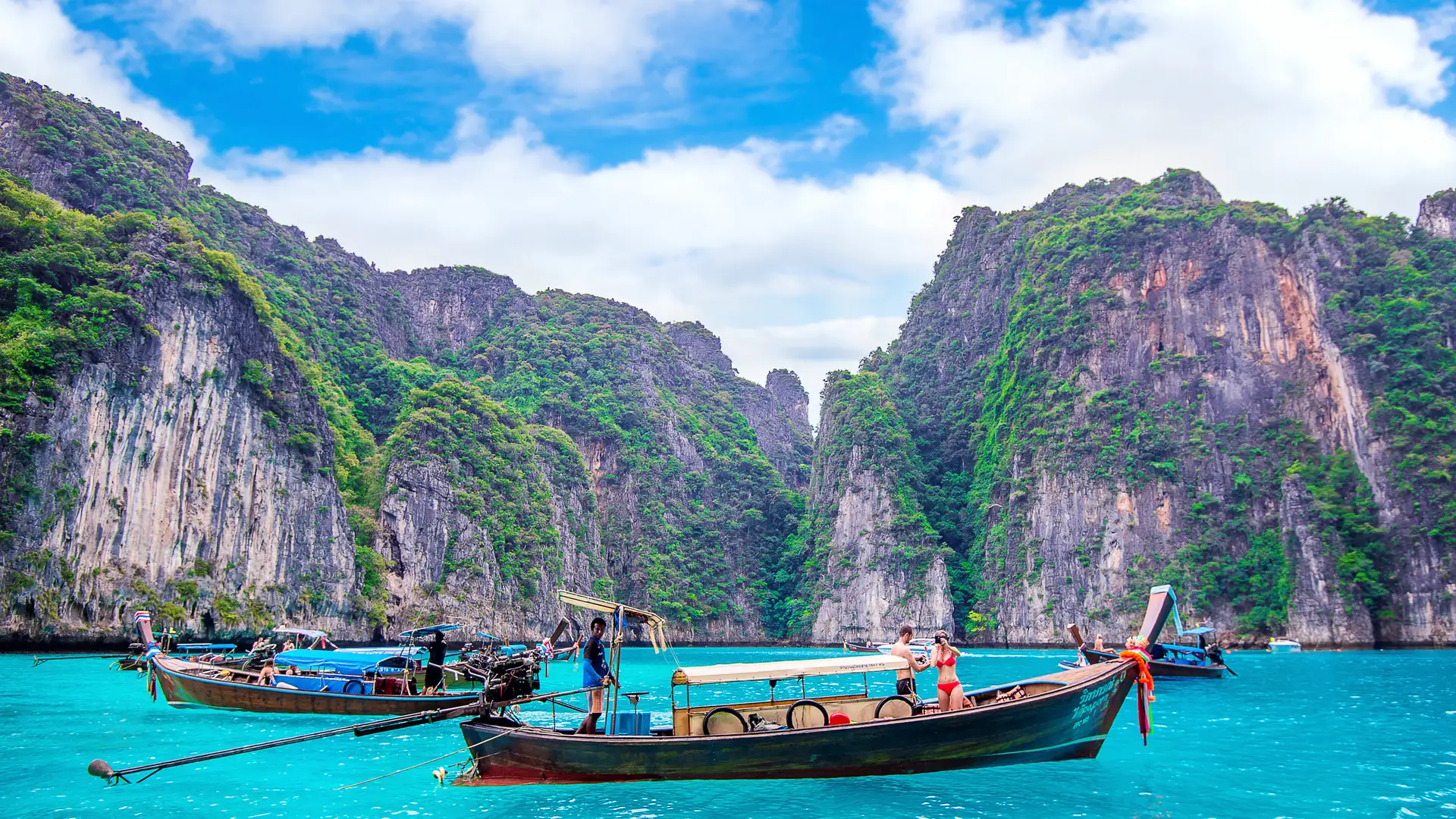

Travel that changes you isn't a slogan; it's a thing you can plan for, if you plan for the right things. On transformational travel, and what actually does it.
Transformational travel has become a brochure word, which is a shame, because the thing it points at is real. A journey changes you when it interrupts the version of you that runs on autopilot, and that interruption can be planned for, even if the change itself never can.
In our experience three things do most of the work: a little earned effort, real immersion, and enough unstructured time for the trip to catch up with you. A week spent learning something hard. Days among people whose lives look nothing like your own. Mornings with nowhere in particular to be.
In practice it might be a Muay Thai camp that rearranges your relationship with discomfort, an Ayurvedic week that resets a frayed nervous system, a solo journey that quietly proves you can, or a few days alongside a conservancy that recalibrates what you thought mattered.
None of this requires roughing it. The comfort is what lets you go deeper: a beautiful, quiet base to come back to, the logistics handled, the recovery built in. Luxury, here, is simply the absence of friction between you and the experience.
So we don't promise transformation; no one honest can. We build the conditions for it (the effort, the immersion, the space) and put one concierge in charge of everything else, so you can be fully present for whatever the journey turns out to be.
Tell us what you're carrying, and what you'd like to put down. Beyond the itinerary, for moments you can't map.
It helps to know what to expect of the thing itself. Change rarely arrives on cue, mid-trip, with a view attached; more often it lands quietly weeks later, on an ordinary Tuesday, when some old reflex simply fails to fire. The traveller who spent five mornings failing at a language, or standing in a kitchen learning to fold dumplings badly, comes home with less a memory than a small recalibration. Novelty alone won’t do it. You can circle the world behind glass and return exactly as you left.
Which is why the days after matter as much as the days away. We tend to leave the end of a journey deliberately soft, and to warn against booking a punishing week the moment you land, because whatever shifted needs a little quiet to settle rather than a full inbox to erase it. A day of nothing on either side of the effort is not indulgence; it is where the effort actually banks.
Frequently asked
How long does a transformational trip need to be?
The shift tends to need repetition, so a single grand day rarely does it. A week is usually the floor: long enough to fail at something, get a little better, and still have mornings left over. Much shorter and you generally come home with photographs rather than a change.
Does it have to be a solo trip, or can a couple or family do it too?
Both work; they simply do different things. A solo week tends to prove something to you about you, while a shared one changes the shorthand between people, which is its own kind of change. We have built each, and the design differs more than you might expect.
Isn’t real change at odds with luxury and comfort?
We find the opposite. Discomfort you didn’t choose (a bad bed, a missed connection) just makes you defensive. Discomfort you did choose (a hard climb, a cold plunge, a language you can’t yet speak) is where the work happens, and it settles far better when the base you return to each evening is calm and handled.